
What makes a good Feasibility Study for BGA Block Grant Applications?📝💰🤔💭

Hey again School Leader!
If capital works are on your school’s horizon, this might be useful.
I recently put together a short timeline of services for independent schools developing a Site Masterplan, particularly schools working through their ISV Grant Application journey.
But it got me thinking:
What actually makes for a good Feasibility Study?
Is it about capturing all the possible scope?
Is it about getting the budget right?
Is it about co-contribution?
Is it about demonstrating the relationship to your Site Masterplan and teaching outcomes?
Or is it something else?
Here’s what we’ve learned from doing this work.
1. Get the right people in the room early 👥
A Feasibility Study sits somewhere between Pre-Design and Concept Design. At its heart, it is a business case — a way of demonstrating whether a proposed educational project is viable and supportable.
But a project is only as good as its client (and their involvement in the project) — thank you, Glenn Murcutt.
School leaders, teachers and educators have enormous knowledge about how their school actually works. They understand the students, the curriculum, the operational challenges and the opportunities.
Architects understand how those needs can translate into the built environment.
The best Feasibility Studies bring those two forms of knowledge together early to define the “what” and the “why” of the project.
2. Answer the “Why?” 🎯
Why does this project need to happen?
What need is the school trying to address?
It might be enrolment growth, operational efficiency, teaching and learning, accessibility, compliance, ageing facilities — or simply meeting contemporary expectations for educational environments.
For example, perhaps bathrooms need to be upgraded to provide more inclusive facilities. Perhaps alternative access is required for people with disability. Or perhaps the school needs additional teaching spaces to accommodate enrolment growth.
Whatever the driver, make the need for the project clear.
3. Show where the project fits within the Masterplan 🗺️
A Feasibility Study shouldn't exist in isolation.
Where does the proposed project sit within the school’s Strategic Plan and Site Masterplan?
Does it build on previous planning work? If it doesn't, explain why.
Things change. Enrolments change. Educational models change. Budgets change. School priorities change.
A good Feasibility Study acknowledges that history and explains why this project, and why now?
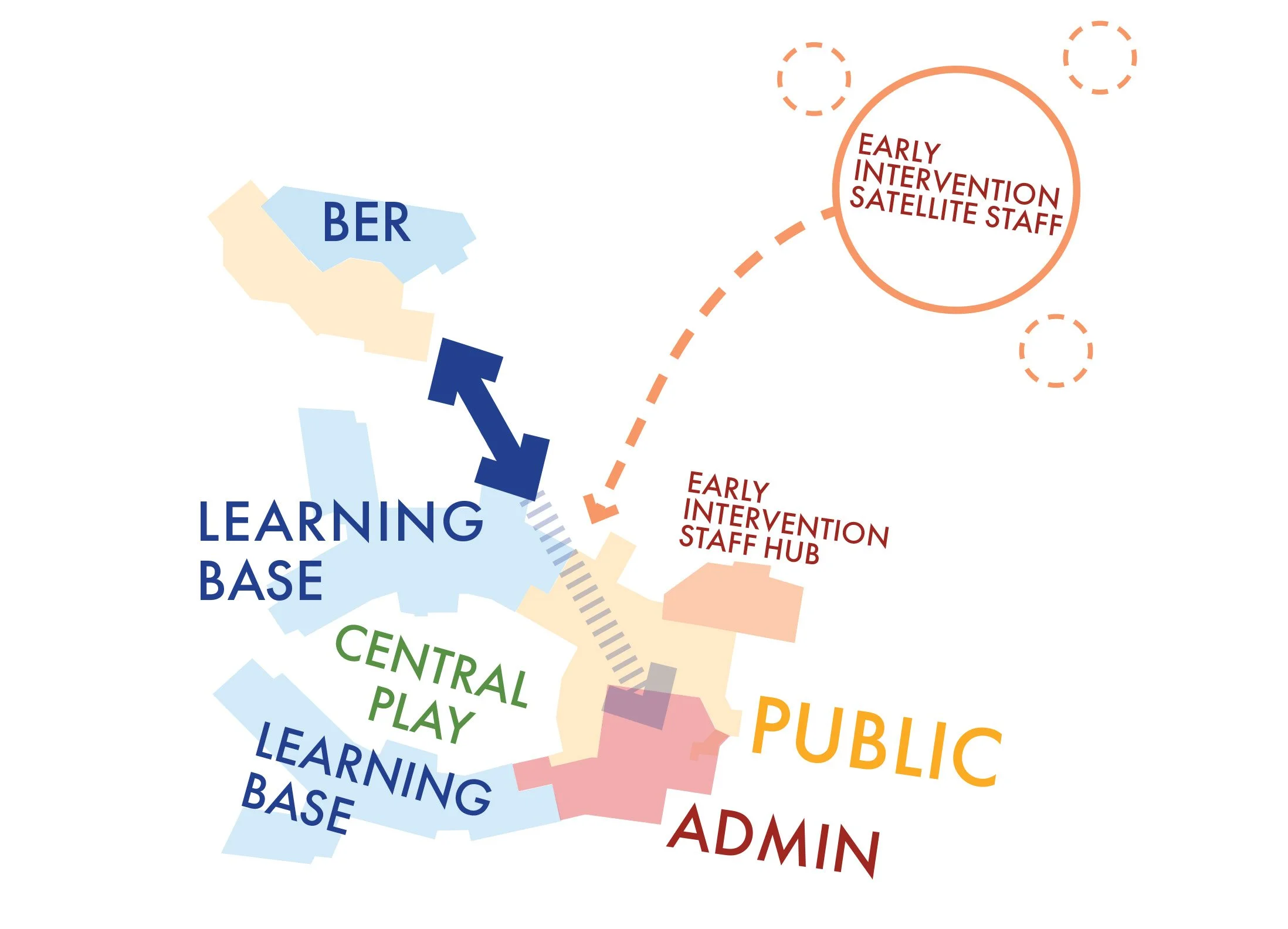
4. Demonstrate the opportunity for pedagogy and design 📚
Don't just describe the rooms you want to build.
Explain what the project will enable.
How will the proposed works support teaching and learning?
How might the spaces allow teachers to develop new approaches to learning? How could the design provide greater flexibility, collaboration, connection or spatial literacy?
The strongest Feasibility Studies don't simply ask:
“What do we need to build?”
They ask:
“What could our school do better for our students and staff on campus if we build this?”

5. Plan with the end in mind 📅
Start with the outcome — including the desired opening date — and work backwards.
Map out the Project Life Cycle and identify the time required for each phase:
Site Master Plan →Pre-Design → Feasibility → Design → Approvals → Procurement → Construction → Handover
Then test the programme.
Where are the critical milestones? What needs to happen before something else can start? Where is there flexibility — and where isn't there?
And importantly, allow for the fact that things will change.
A realistic programme isn't one that says everything will happen perfectly. It's one that identifies where things might move and allows the project team to respond.
6. Ask: “What could possibly go wrong?” ⚠️
This is where risk analysis becomes important.
Are there known latent conditions?
Are hazardous materials present?
Is planning approval required?
Will a building permit be required?
Are there site constraints that could affect construction?
Are there known unknowns that could affect the Scope, Time or Budget?
Talk about these things early with your project team.
You don't need to eliminate every risk — that's impossible.
But you should understand the risks, understand their potential consequences, and have a plan for how the project will manage these if they occur.

7. Build a realistic Budget Plan 💰
Finally, the budget needs to tell a realistic story.
Work with your cost consultant to develop a Budget Plan that considers more than just today's construction cost.
Consider:
Construction Cost
Construction & Design Contingency
Escalation
Locality / Regional Allowances
Tender Options
Consultant Fees
Approvals and Statutory Costs
Other Allowances
A dollar today is unlikely to cost the same in 12–18 months.
The question isn't simply “Can we build this for $X?”
It's: “What is a realistic project budget, when we consider the whole journey from today to completion?”
So, what makes a good Feasibility Study?
For me, it comes down to this:
A good Feasibility Study connects Educational Planning, Schools Strategic Goals, what facilities and buildings are need, why they are needed on campus, how much should it cost and how long to get to the opening date.
It should give school leaders and their communities confidence that the project is:
Strategically justified.
Educationally valuable.
Spatially achievable.
Financially realistic.
Time-sensitive.
And understood in terms of risk.
And perhaps most importantly, it should provide a strong foundation for the next conversation — “Okay, let's make it happen.” 🚀

At WHDA, we specialise in education and public works. I'm one of the Directors, and Iʼve spent most of my career working across education and public projects.
But I'm still genuinely be curious to hear from you👂:
What has your Feasibility Study process looked like? What worked? What questions did the Grant Body ask of you? And what would you consider for next time?
Would love to hear from you soon.
Cheers,
Redmond Hamlett, Director
office@whda.com.au
+61 414 838 317