What have we learnt working on school projects? 🏫

Hello there School Leader!
I recently put together a short timeline of services for independent schools developing a Site Masterplan, particularly schools working through their ISV Grant Application journey.
But it got me thinking:
What have we learnt working on school projects? 🏫
Here’s a few things we jotted down from doing working with schools over the years.
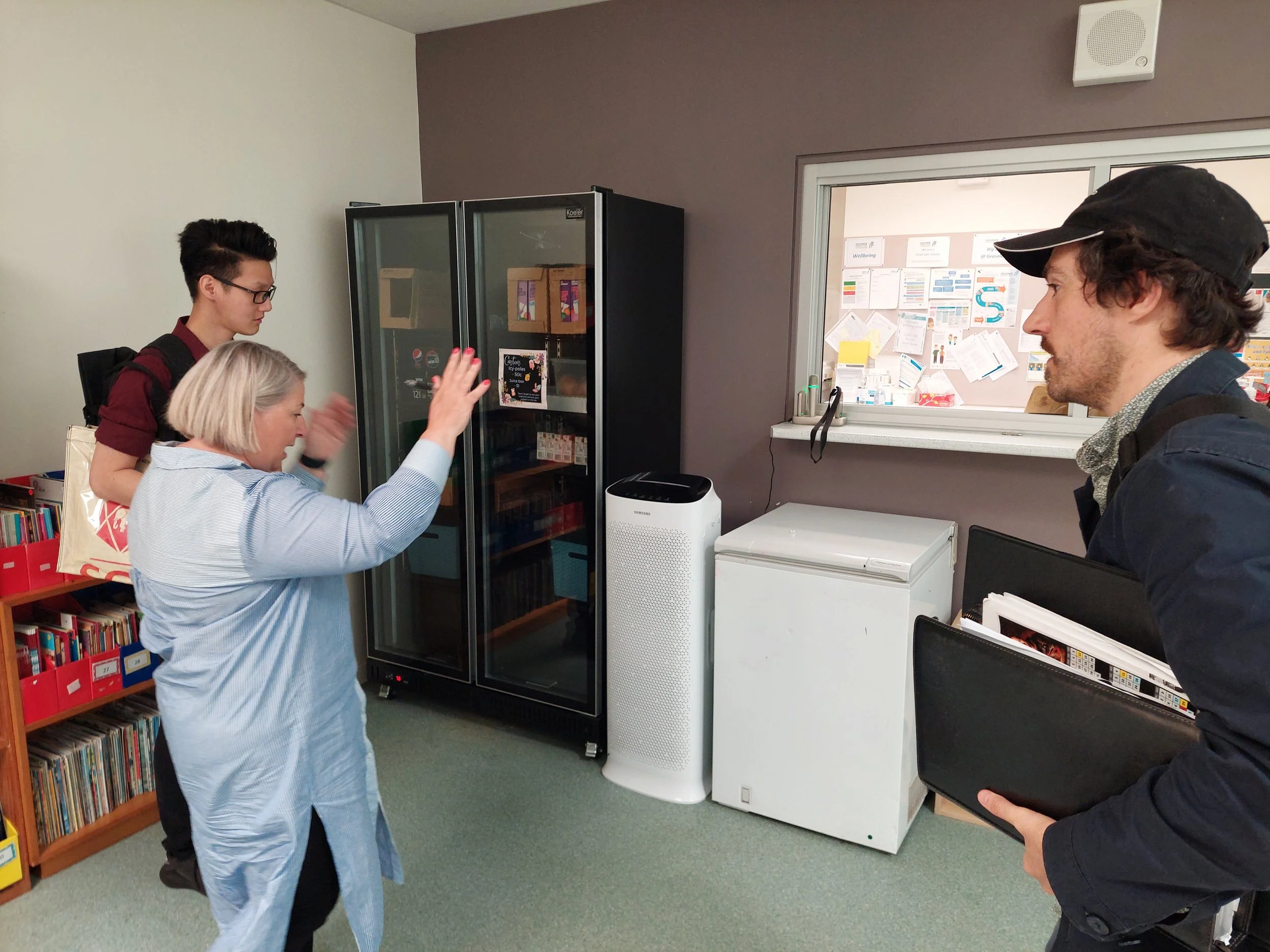
1. 👂 Assume nothing. Practice active listening.
Don’t assume you know something that other people in the room haven’t heard before.
Be prepared to be humbled by what people actually think—and by what they tell you.
And if the Client is talking more about the “why” behind the project than you are, you’re probably on the right track
2. 🌱 Keep design ideas open-ended. Let the conversation percolate.
Design rarely arrives in a finished state.
In fact, the finished work is not necessarily the product.
The best ideas often evolve through conversation, testing and participation. Staff and students can take an idea and make it their own.
That ownership matters.
3. 🏘️ Schools are more than “places for learning”. They are places for community.
Schools are strategic assets.
They can create opportunities for community connection, engagement and participation—and sometimes those opportunities emerge as a by-product of the project itself.
The best school projects can do more than accommodate a curriculum. They can contribute to the life of a community

4. 🌏 Learning environments allow students to practise what they learn in theory.
Schools are miniature cities.
They are places where students navigate relationships, responsibility, independence, collaboration and community.
Their learning journey is ultimately preparing them to become conscientious citizens and lifelong learners.
So the environment matters.

5. 🔍 Design exploration is not a waste of time.
Exploration helps us understand what works by testing it against what doesn’t.
Giving people the opportunity to express their problems and define their aspirations is incredibly valuable. Meeting people where they are means acknowledging that they bring life experience to the project—their homes, livelihoods, urban context, identity and community.
All of this feeds into generating better ideas.
And perhaps this is why architecture is fundamentally an act of refinement: responding to people's needs for shelter, identity, personal growth and cultural expression.

6. ✏️ Often, the best design solutions are the simplest.
We’re not suggesting “boring”. We are suggesting keep it simple.
Teachers and educators ultimately “design” their own learning environments through the way they use them.
Architecture as space should therefore provide the affordances to do that—and allow people to make the environment their own.

7. 📊 Design with the spreadsheet. Avoid Value Management.
Schools are funded through public or private investment. That funding needs to be acknowledged and respected.
That means taking active steps early in the design process to understand what the project should be.
-Scope.
-Brief.
-Strategic goals.
-Budget.
-Contingency
-Tender options.
-Escalation.
-Locality / Country Tax.
And all the other allowances for “what could possibly go wrong?”
We believe good design and good cost management happen together.
Value Management is extremely wasteful.
Particularly when it happens late in the process—during tender or construction. At that point, something has usually already gone wrong, and nobody wins.
The best bake in the ideas that can’t be value-managed away early.
8. 🏗️ Builders realise our architectural ambition. Nurture the relationship.
Architects design. Builders build. But our drawings define the architectural ambition. Our job doesn’t stop when construction starts.
Engage with construction, sequencing, detailing and tectonics. Be curious. And be open to resolution suggestions that aren’t your own.
Builders are very good at the “school of life”. They have probably built structural systems like what we are use in our designs multiple times before. There is refinement in practice.
Learning to lean into their knowledge and construction expertise is critical to the built outcome of education projects.

At WHDA, we specialise in education and public works. I'm one of the Directors, and Iʼve spent most of my career working across education and public projects.
So, what have you learnt?
What has working on School Design and Building Projects taught you?
I’d genuinely love to know. Please feel free to reach out so we can learn from you.
Cheers,
Redmond Hamlett, Director
office@whda.com.au
03 7020 5784