Regional Architecture Association - Reflections Experience - Part 2 – Practice Regionally: What does regional practice demand of us?
Dear Readers,
Day 2 of the Regional Architecture Association’s Reflections was broad-ranging, but there was a clear thread running through many of the sessions. Distance, Repair and Trust.
As Ian Sercombe from the RAA Creative Director’s team reminded us, the conference was an opportunity to reflect on why we choose to practise regionally, and how those decisions shape our practice of architecture.
Cobar: a town under pressure
We began outside The Youthie with a Welcome to Country from Aunty Elaine of the Nguyampaa Wangaaypuwan peoples. Her reflections on dispossession, colonisation and the impacts of mining and pastoralism also spoke to the double meaning of losing something while receiving something in return.
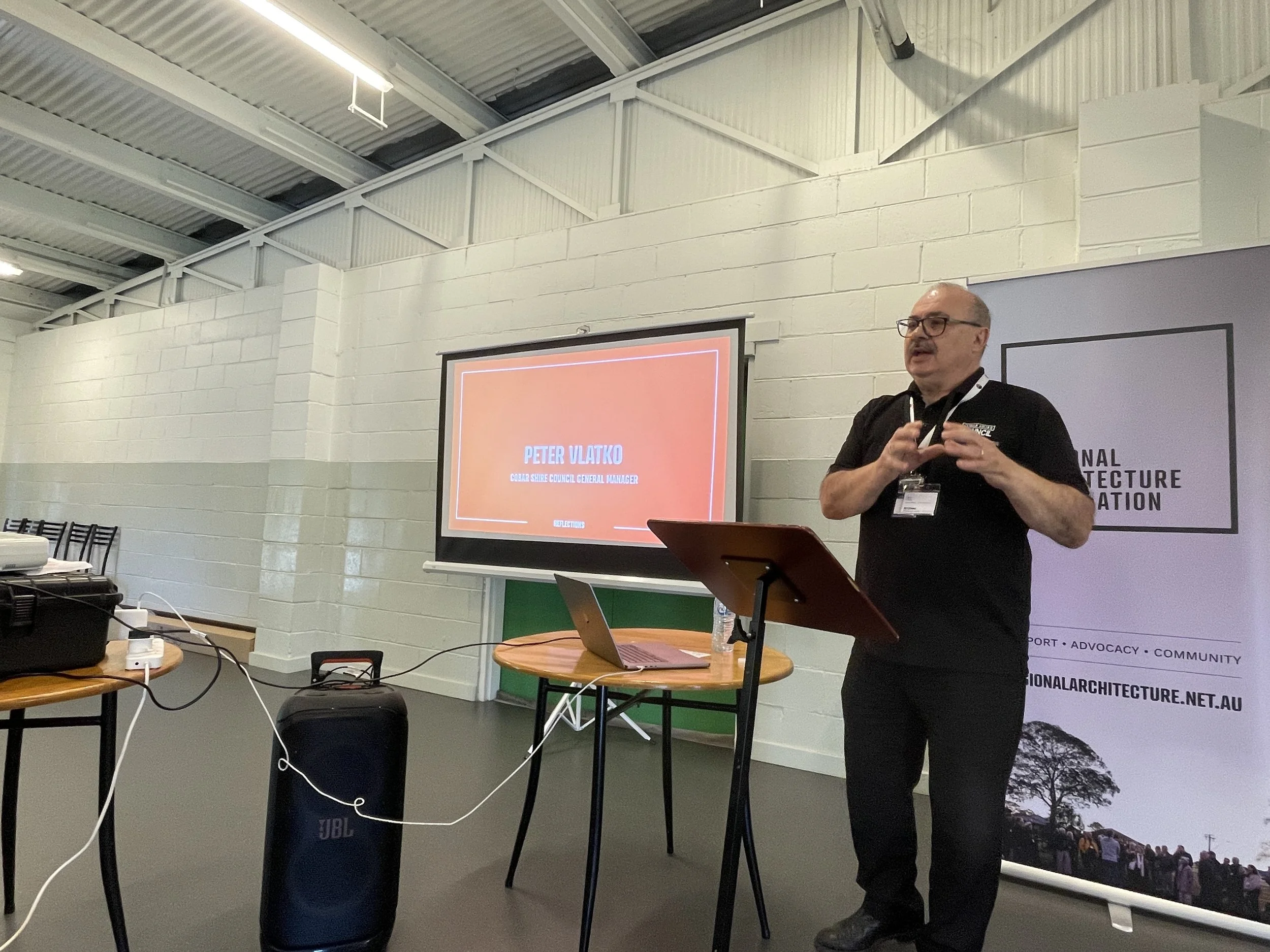
Our first speaker was Peter Vlatco, General Manager of Cobar Shire Council. Cobar is experiencing significant growth, increasing from around 4,000 people in 2016 to nearly 8,000 today. That growth brings pressure for housing, accommodation, caravan spaces, tourism infrastructure and services for local families, as well as the mining and engineering workforce.
Peter’s message was simple:
“The community is proud of how it looks – it needs good architects to support that.”
He also offered another observation that really stuck with me:
“Sometimes the rules interfere with the intent of the goals.”
He argued that community projects don’t always add up financially, and that sometimes the community benefit has to be the payoff. Councils also need help — they don’t have all the answers or expertise, and need cooperation from architects, industry and others. It was refreshing to hear such a direct expression of faith in the profession.
But there’s a responsibility on us too. If architects want councils to trust us with the future of their towns, we need to act in good faith and make it easier to work together.
What could change so that the vision of towns like Cobar can actually be realised?
People + Place
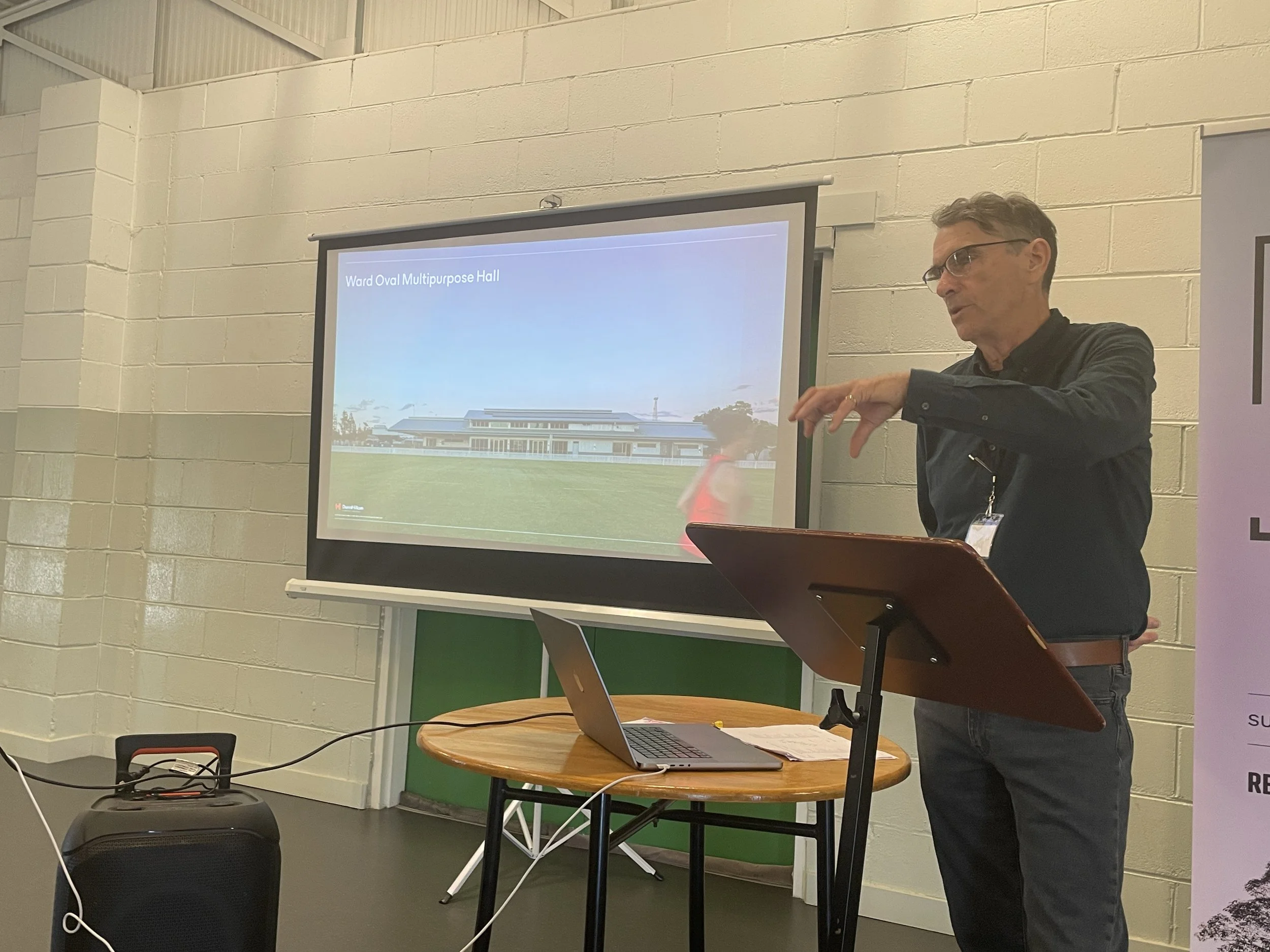
Next was Jonathon Temple, Senior Associate at Dunn Hillam, who gave us a look behind the scenes at how the practice approaches regional work.
This was one of two sessions I gravitated towards most.
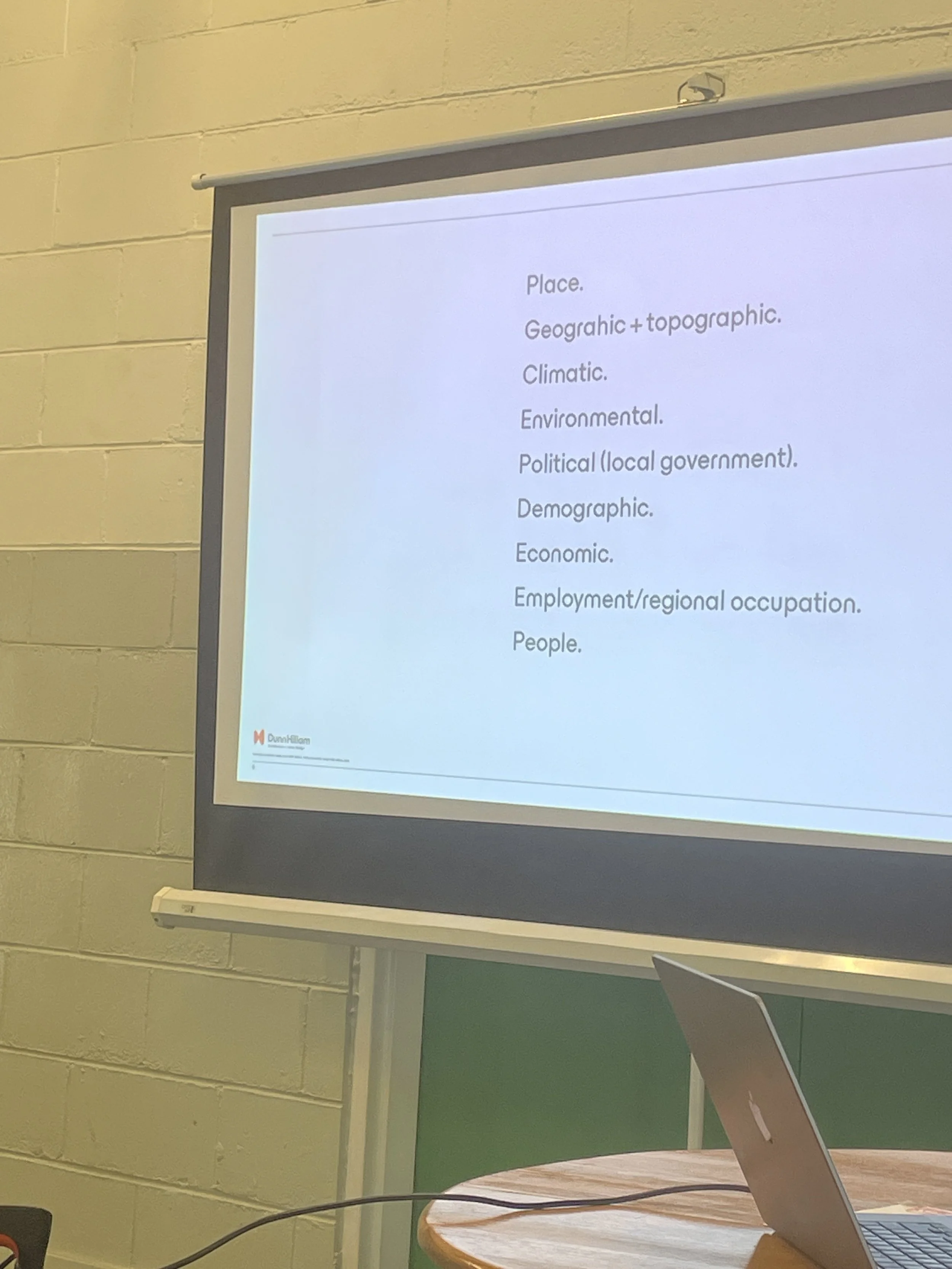
For DH, at either end of their considerations are People and Place. In between sits a deceptively simple set of principles:
Glean what is most important.
Remember that communities have long memories.
Test the boundaries of scope and consider the wider impact.
Recognise that regional projects can have enormous political, economic, social and environmental impacts.
Do more with less. “Weight only matters in steamrollers.”
Don’t parachute in.
Be relevant and collaborative.
Collect and acknowledge feedback.
Recognise the knowledge First Nations people have of Country and acknowledge our own knowledge gaps.
Temple borrowedfrom Glenn Murcutt:
“Regional work forces us to think deeply as the impact of the work is greater.”
The projects reinforced the point.
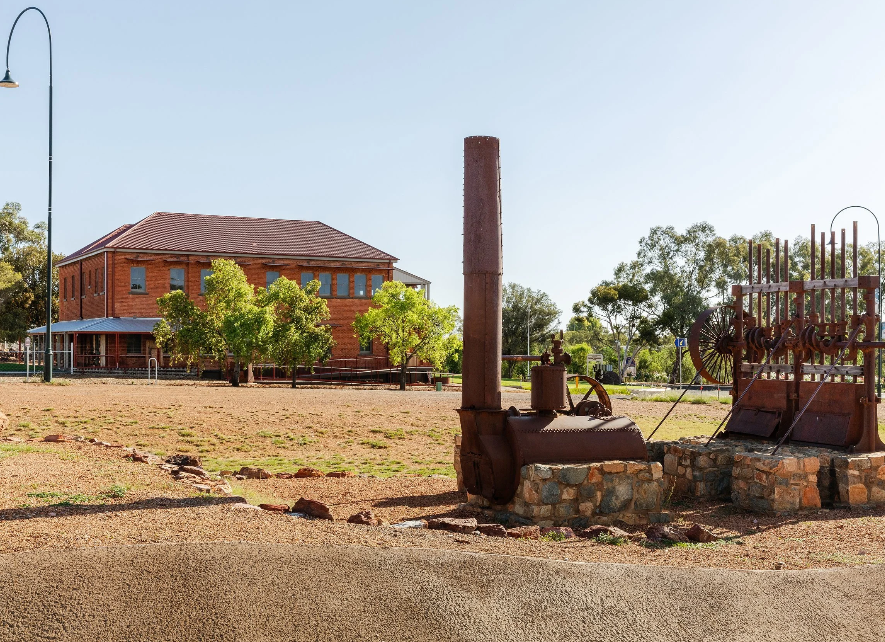
At the Great Cobar Museum & Landscape Precinct, Covid and inflation “stressed” the relationship, while the project team had to balance creating an important civic node with doing more with less — removing structures that were no longer fit for purpose and revealing the original fabric.
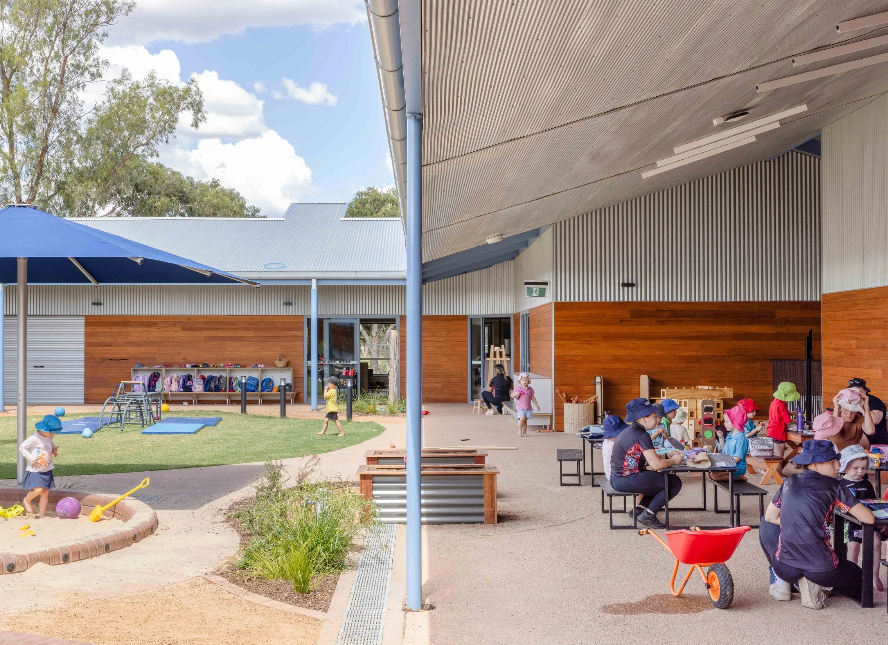
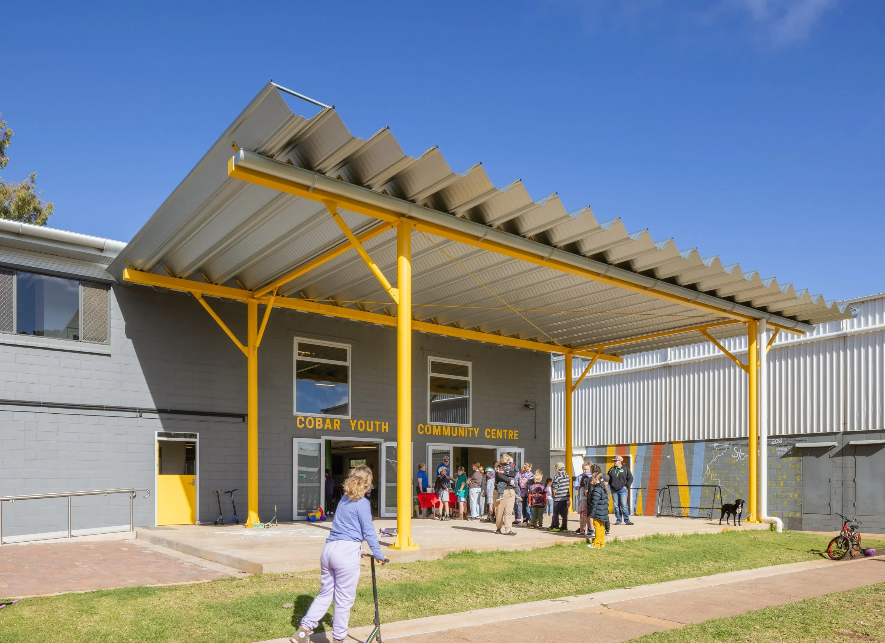
At The Youthie, “gleaning what is most important” became the key. The project had to deliver a welcoming, robust and accessible space for young people, with a budget that had to be spent within a fixed timeframe. The answer was not more building. It was stripping back what wasn’t essential, relying on local expertise and delivering what was actually requested.
One comment from Temple, after showing the project to Atelier Bow-Wow, made me smile:
“We don’t have anything like this in Japan – the Youthie is like a children’s pub!”
The tyranny of distance
During Q&A, Temple also touched on something every regional practitioner knows: distance costs money. Face-to-face communication remains important, but visiting remote regions is expensive and time-consuming. That cost either comes out of the architect’s fee or the council’s budget — and councils often can’t or won’t pay for every meeting.
The answer?
Find a third way to keep communication at every stage.
Architecture better storytelling
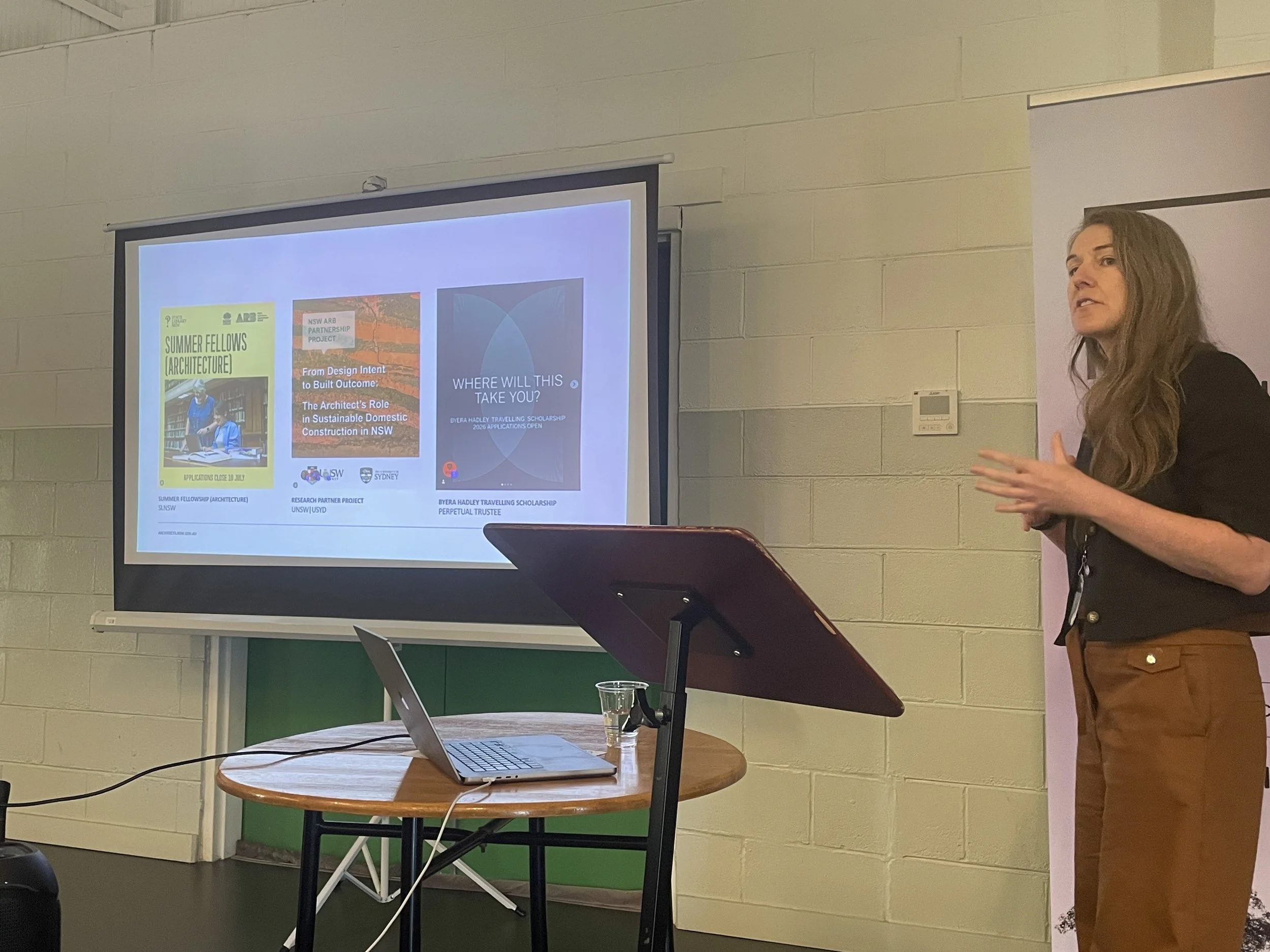
Our third speaker was Melissa Hollis, Communications and Engagement Officer at the NSW Architects Registration Board. Her background in libraries, exhibitions and architectural communication led to a question I found particularly interesting:
How do we communicate the value of architecture to people who don't necessarily engage with the profession?
The regulatory role of the Board remains focused on compliance and consumer protection, but Hollis also sees an opportunity to promote awareness of architectural issues, better inform the public, highlight the benefits of architectural services and challenge the perception of architects as elitist. Storytelling is one way to do this.
She also raised the possibility of architects moving beyond the traditional residential service model towards smaller-scale advice and consultancy — giving people access to architectural thinking, sustainability strategies, research and design advice without necessarily commissioning a traditional architectural service.
That made me think of ArchitectGP and similar models. There are also opportunities through initiatives such as Sustainable House Day, Year of Architecture and the Byera Hadley Travelling Scholarship to make architectural knowledge more publicly accessible.
One thing particularly surprised me: the NSW Architects Registration Board has become a corporate supporter of the RAA’s Field Magazine, helping distribute copies through libraries across the state. It left me wondering:
Have professional organisations dropped the ball by leaving some of the work of promoting architecture to a compliance and regulatory body?
Or am I missing something?
Procurement is embodied in architecture
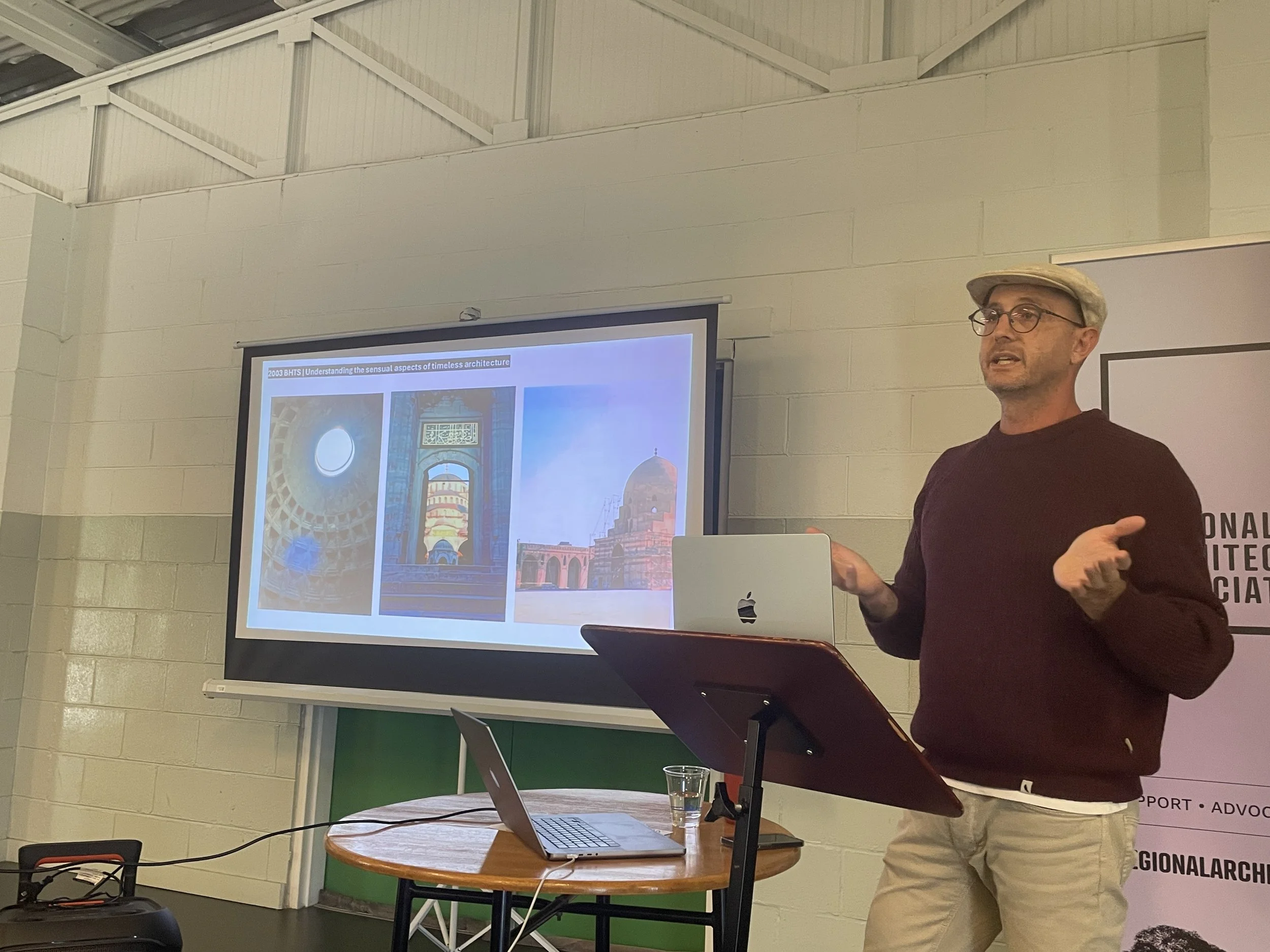
The final speaker of the morning was Paulo Macchia, Director of Design Governance at the Government Architect’s Office of NSW. His career trajectory has moved away from being “obsessed with the drawing and building” towards being more interested in what buildings do in public — and, increasingly, procurement.
His research project as part of being awarded the Byera Hadley Traveling Scholarship 2025, Local Legacies – procuring architects to deliver public buildings, looks at procurement across councils, architects and public buildings around Australia, with the ambition of developing something of a practical playbook.
His argument is compelling: regional projects often have enormous social impact, yet local governments frequently lack the resources to pursue “best practice” in the same way that universities or State Governments can.
Procurement therefore matters. It can help :
- address housing and infrastructure needs
- retain knowledge workers in regional areas
-reduce wasted architectural effort and;
- ensure important design requirements are established early, rather than being bolted on at the end of documentation.
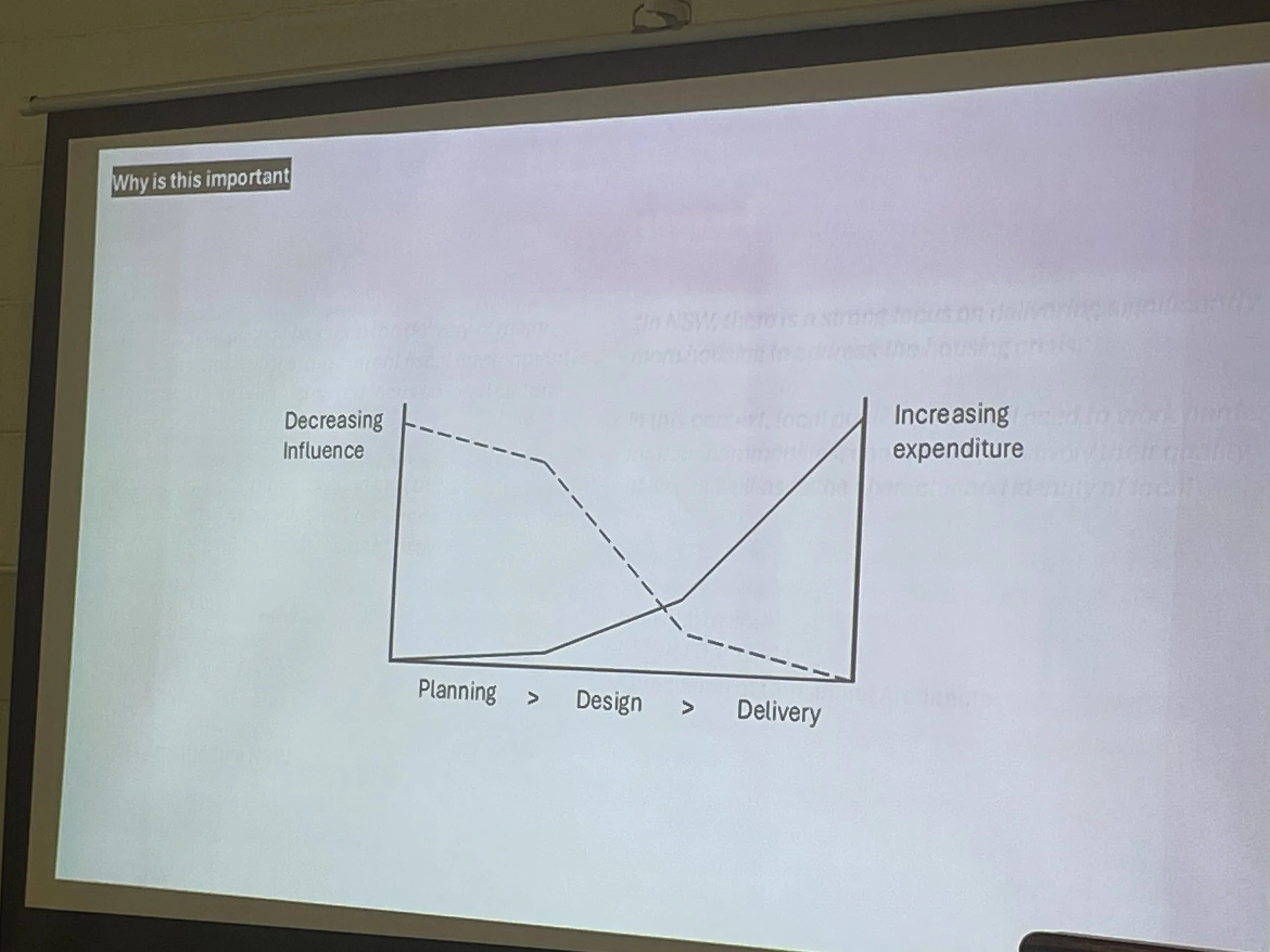
Macchia’s proposed five-step smart procurement process isn't a “one-size-fits-all” solution but “it depends”. It depends on the:
- scale and complexity of the project;
- its social impact
- construction value, and;
- the capability and location of the proposed design team.
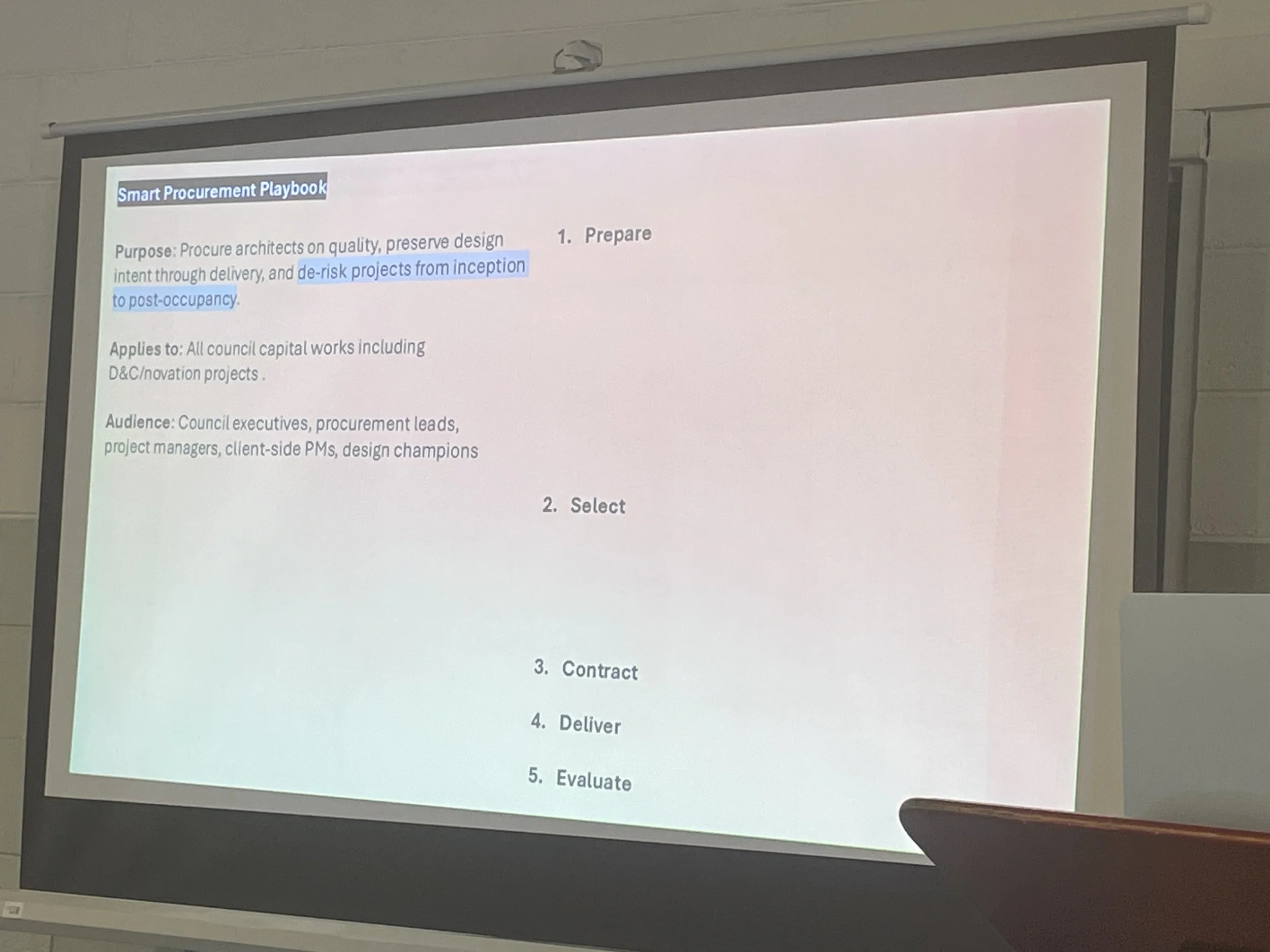
And this is where my ears really pricked up.
The question of unpaid or speculative design work during RFTs be clarified to “design approach”. That’s not to say Open tendering completely vanishes, just gets broken down into smaller steps to narrow down the real tendering field and minimise the time of all participants involved. Still a place for direct appointment on very small projects. The aim is to have smaller tender panels and move away from Cost being the primary assessment criteria.
Macchia’s argument was that different procurement models have their place — but the cost of asking architects to repeatedly tender needs to be respected.
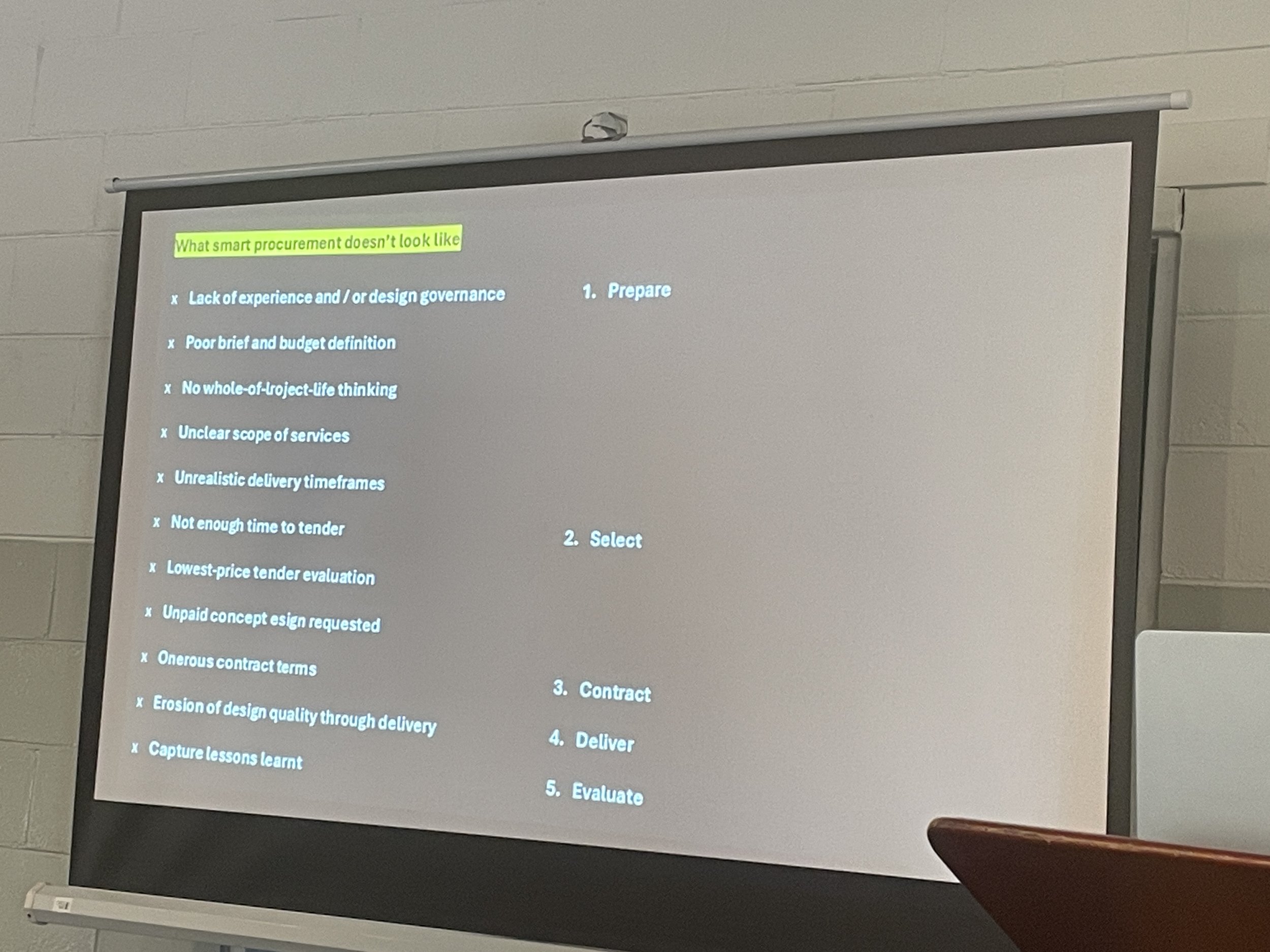
Macchia showed the audience a few case studies, including some exemplar models including the Regional Art Gallery, in Lismore NSW (by DFJ Architects), for around $6mil in construction value, procurement was conducted by having a 2 Stage Tendering Process, first an Expression of Interest, then later a Tender with 4 architects participating. Compare this to the anecdotally high levels of public open tendering where anywhere between 20 - 40 lead architectural firms participate, what value does the cost to participate have in this circumstance.
The author has spent a fair amount of time as the self-professed “procurement boffin” in my office, this really resonated. We have tendered plenty of work. We don't win every project, but when a tender is curated or invited, the time and effort involved feels much more respected – and the chances of winning considerably higher.
Macchia’s research opened up a much wider conversation for me around contract models, construction procurement, insurance, liability and how governments engage architects. Could risk, technical assessment and team fit be placed as the main assessment criteria with cost set aside? Who knows where this could.
And perhaps most importantly: What would happen if procurement could be more widely structured and codified to facilitate better architectural practice, better community outcomes and build trust for everyone involved – no more winners and losers, just winners.
That might be the question I’m taking away from Day 2.
Thanks for reading Part 2 of the RAA Reflections experience.
“Part 3 architecture as a trust mechanism” will be my final reflections on the conference — and, perhaps, the things I’m still thinking about after the dust has settled.
Several photographs are courtesy of conference attendees, Dunn Hillam, Thomas Jager, and the author.
Redmond Hamlett is a Director (Projects) at WHDA Design & Architecture.