
Regional Architecture Association - Power in Community 2026 Experience - DAY 2 Morning Session notes
Dear Readers,
Day 2 of the Regional Architecture Association’s (RAA) “Experience” Power in Community was a jammed packed event! As I mentioned in my Day 1 Notes, Emily Knight from the RAA Creative Director’s team reminded us that the conference is architecture-adjacent highlighting community led projects, which go beyond the object, but revolve around their aspirations in being created as much greater than the sum of their parts.
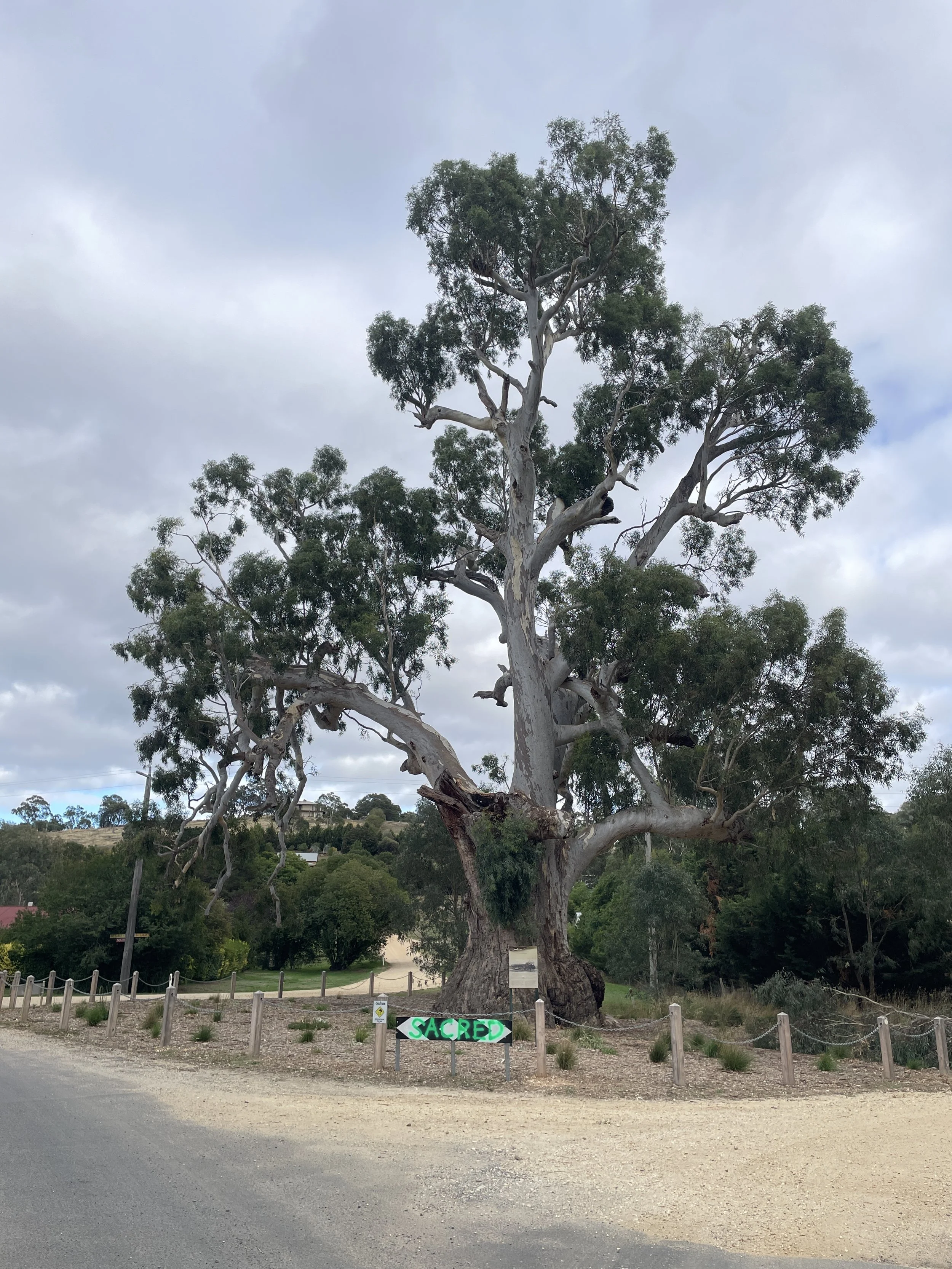
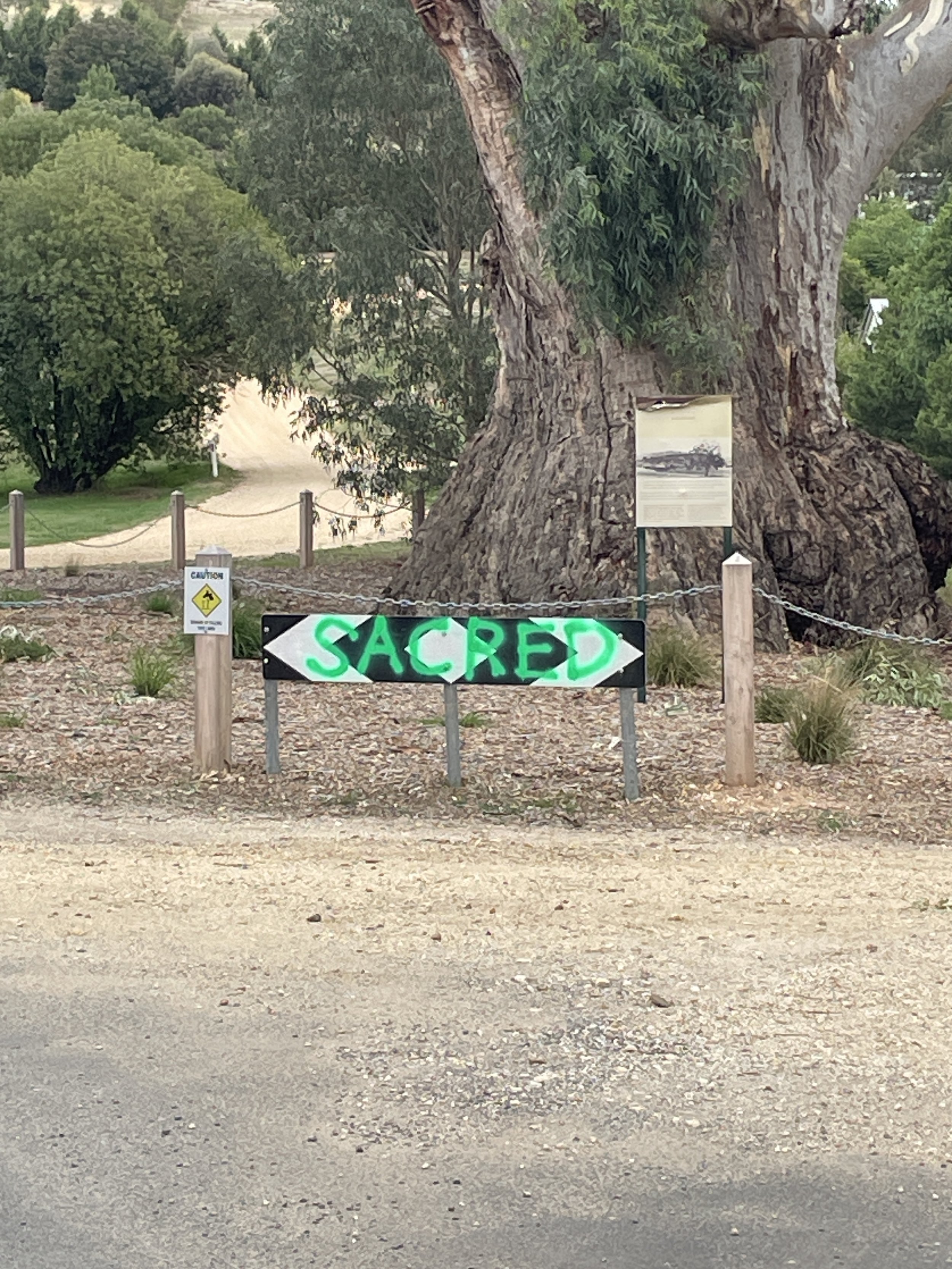
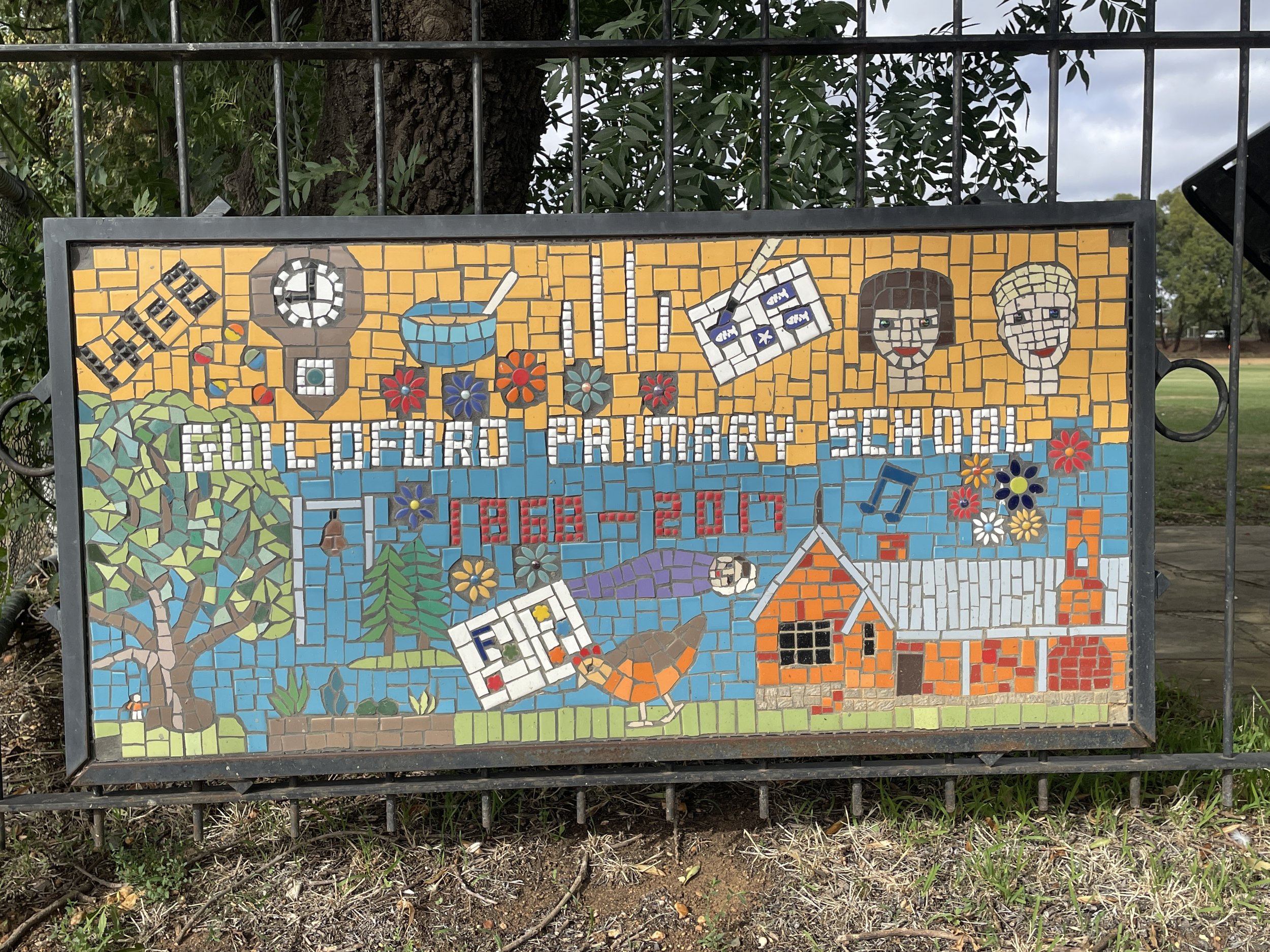
Anyways, it was a beautiful sun-dappled Friday morning in Guildford at the foot of The Big Tree where we opened the event, with an early start. We began with a very moving Welcome to Country, being officiated by Uncle Jason Kerr of the Dja Dja Wurrung Country. Uncle Jason’s message in welcoming everyone for the event was poignant reminder about need for education for our children and having this filter upwards in our attitudes towards long-term maintenance on our journey towards reconciliation, greater compassion and a stronger Australia. I liked his quote that, “there are no winners, but we are all equal on our journey to improve.”
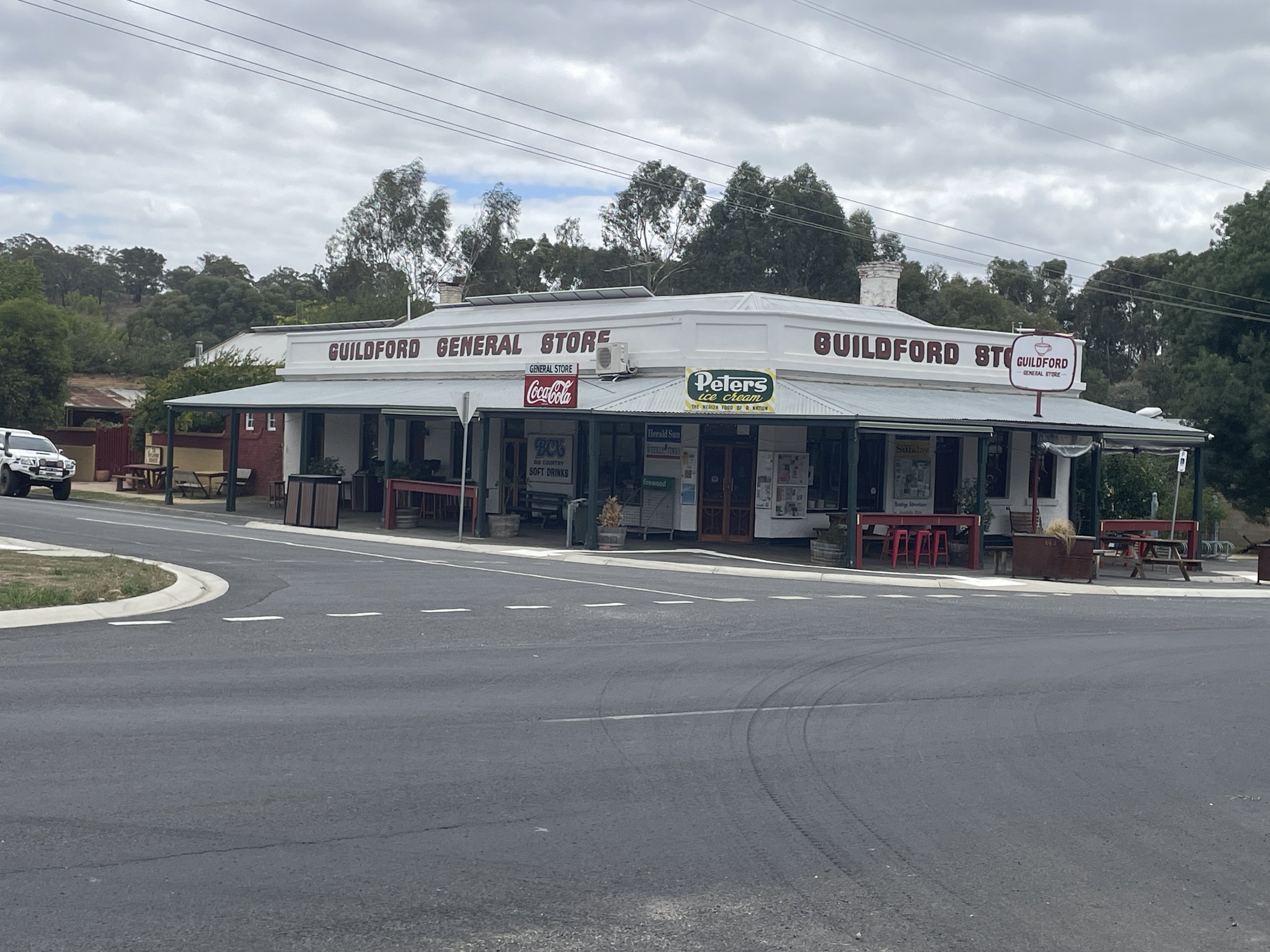
Whilst holding a gum-leaf sapling, in saying Wominjenka, Uncle Jason reminded us that it means, “Welcome, and come with purpose”. And I think this was apt.
Ray Pattle OAM of the Guildford Hall Committee gave a short history to the Colonial ne’ European History of the region. The Big Tree were we gathered was and is still the greatest landmark, probably being over 1000 years old, made of up several trees and growing into one large 9 metre perimeter trunk. Guildfold was also one of the few places where your could cross the Loddon River to travel beyond the Mount Franklin headlands, and this was important of sheep grazers during the 1800s droving between New South Wales and Victoria. After around the 1840s gold was discovered but had to be suppressed by the locals, as the rush that later occurred caused a great influx of temporary residents (up to 6000 residents and 30 pubs at the height of the gold rush in the 1860s) from all over the world.
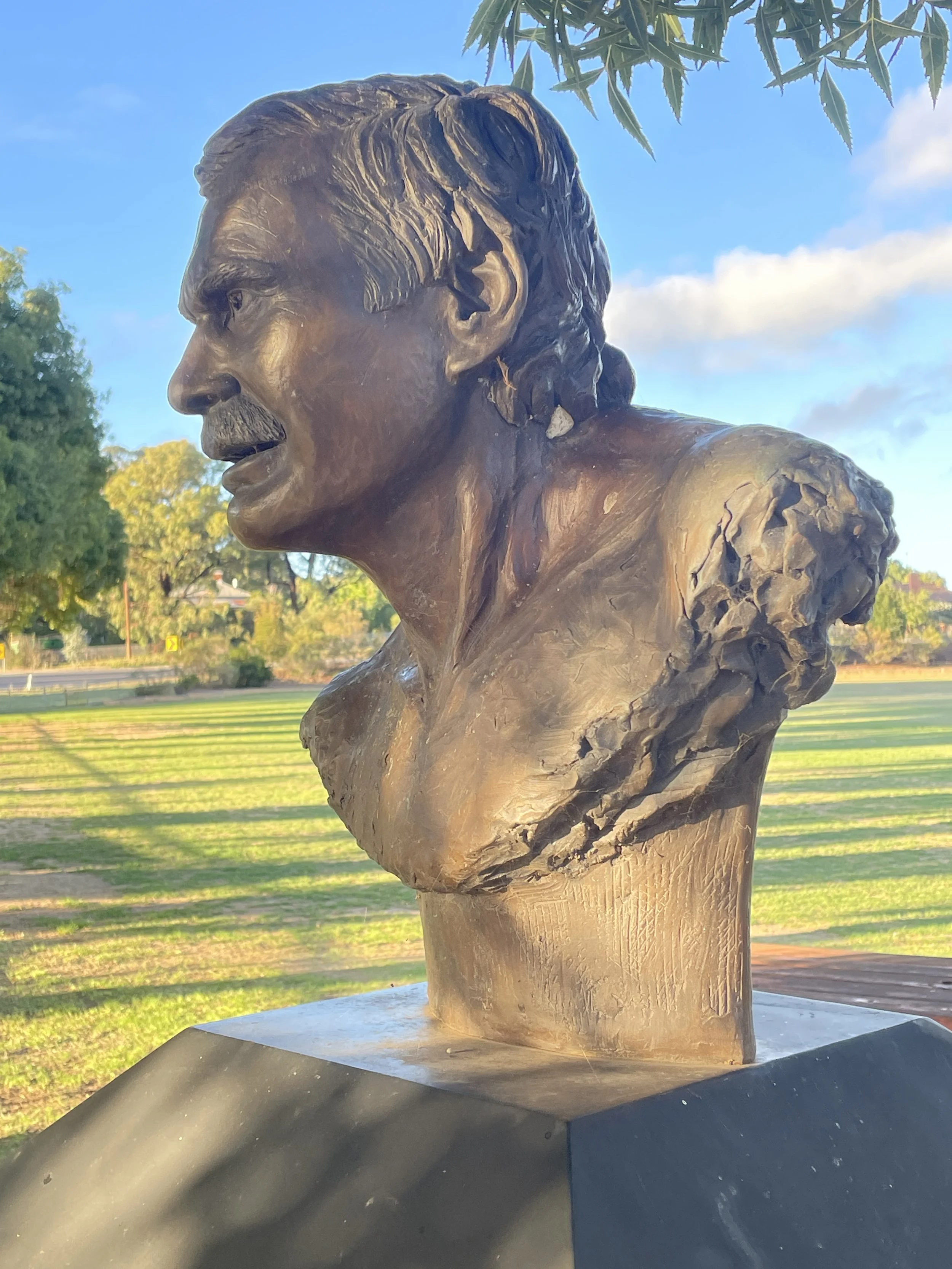
According to Pattle, Guildford has a strong Italian and Swiss diaspora, largely attributed to the Franco-Prussian War in the 1970s (Ron Barrassi the footballer was descended from Swiss migrants, as his bust at the Guildford Oval conveys his larger-than-life contribution to the community and AFL).
Pattle reminded us that Guildford has always been a place that people pass through and rarely settle. That continues today as Guildford is on the road for NSW travelers who make their way south towards the Port of Geelong, and then Tasmania via the Ferry. The contraction and expansion of residents and amenities creates massive impacts on very small regional towns including Guildford.
But the point of this is to say all this is that village life is all about relationships and supporting one another.
After a short walk back to the Guildford Hall (and more well-received Vitamin E) Session 1 was held by Geoff Park from Renewable Newsted. I would describe this as a contrarian tale that the politico’s would rather you don’t hear, but I’m grateful for Park’s contribution.
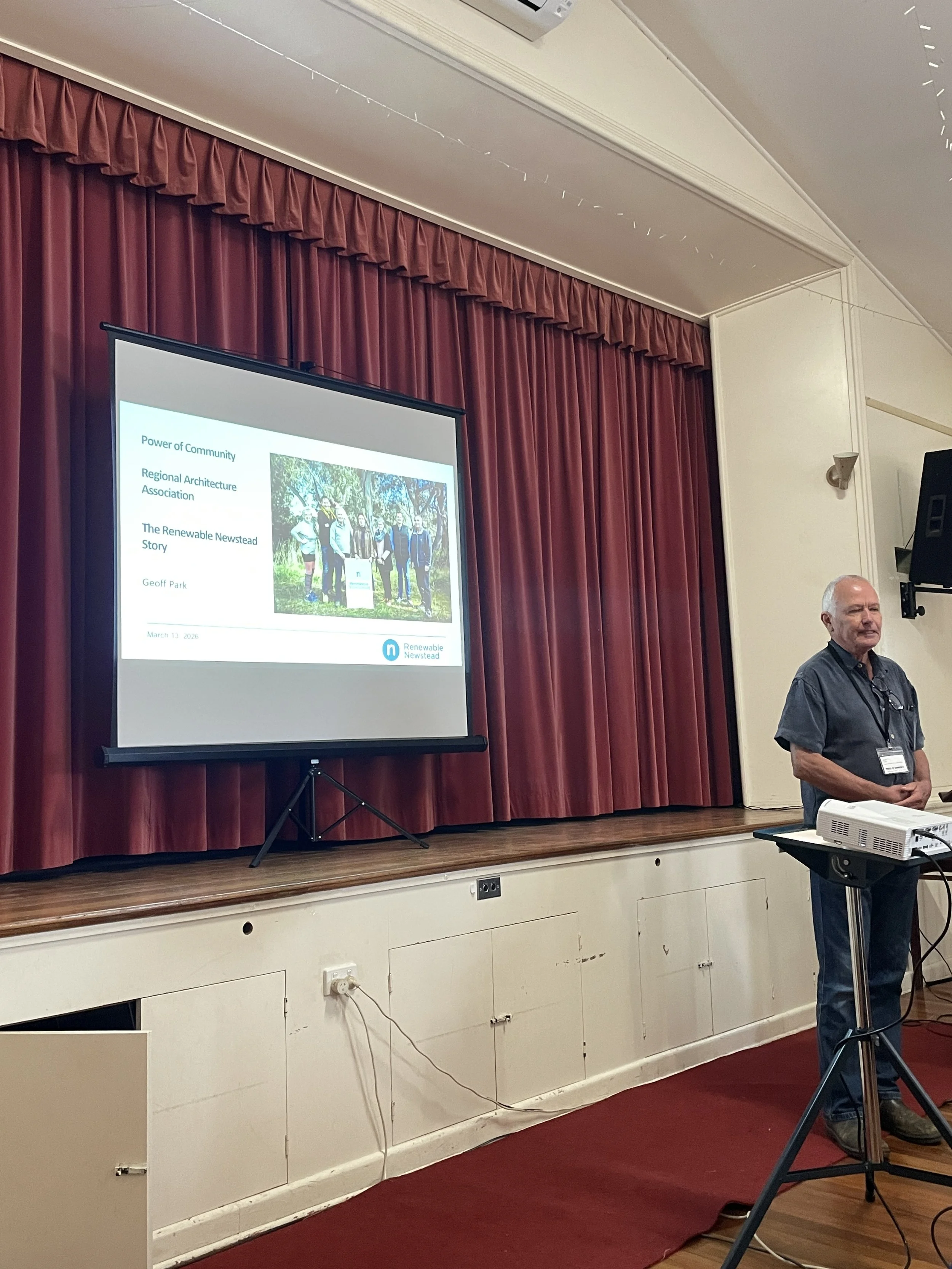
The Renewable Newstead (sorry… the Democratic Socialists Republic of Newstead… I’ve bee told) started as something of a reaction to former Prime Minister Kevin Rudd’s Australian 2020 Ideas Summit back in April 2008 where Newsted residents assumed they wouldn’t be part of the conservation, but boy oh boy they were wrong! They had a seat at the table and were able to bring this back to create ‘Newsted 2021’. Newsted has some 800 residents, the majority of which being older than 54 years, so with an aging population and one just below the mid-range of socio-economic advantage scales, the bush telegraph and sweat equity is pretty much what drives any community initiative.
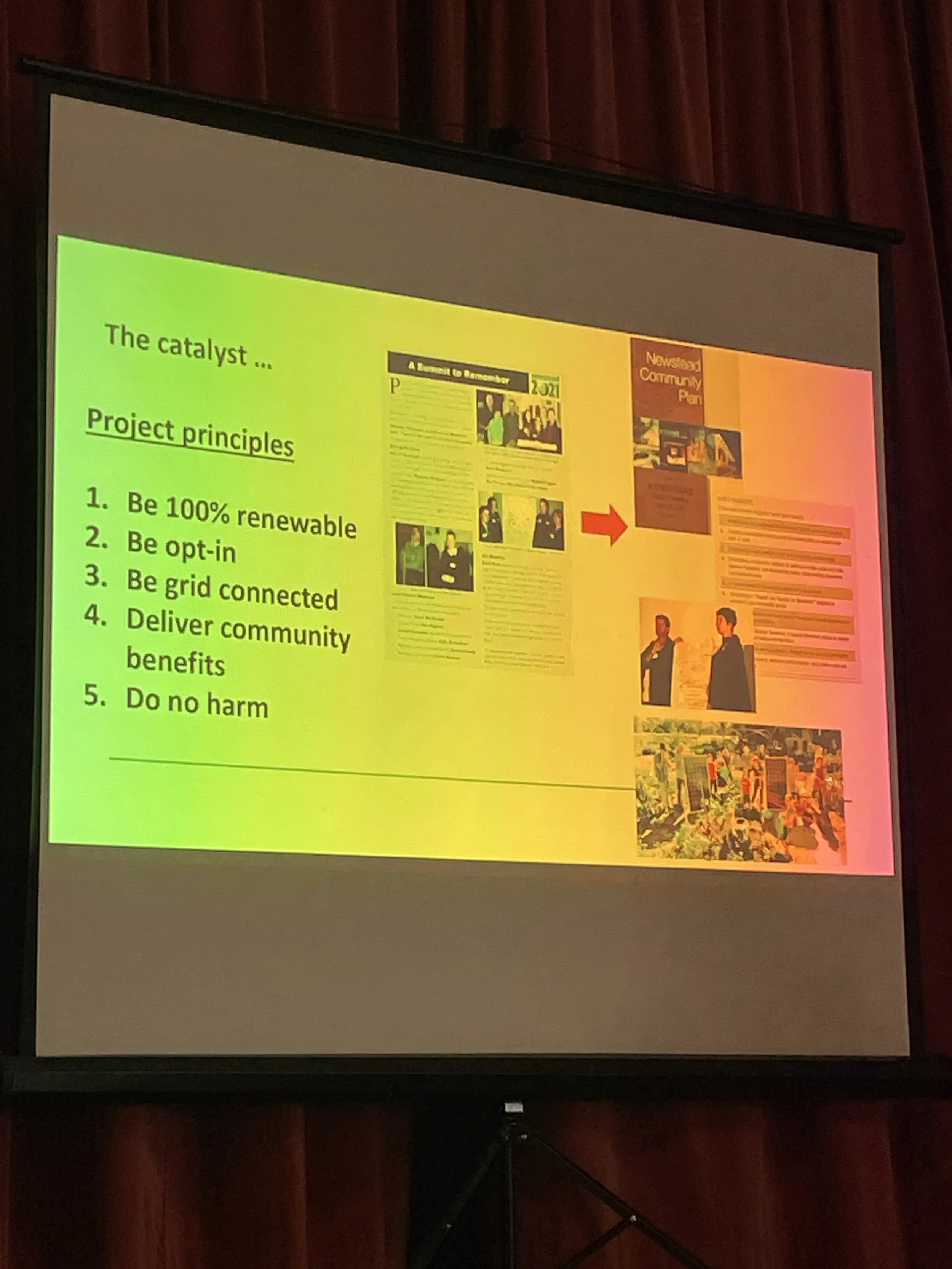
The first project that they got going was the Community Garden and reinvigorating the former railway statin and goods shed (with VicTrack backing) (Now the Newstead Community Hub). In fact community activism has had all kind of successes. You will smirk reading this, but even little things like bringing the speed limit down from 60 to 50km does wonders for community safety.
The big brave project was to build a solar farm by 2021 decided way back in 2010. All based on simple principles, of being 100% renewable; opt-in; be grid connected; deliver community benefits and; do no harm.
Fast forward to 2024 the project did get completed, but not without years of community engagement, soliciting the Victorian State Government to provide funding for planning an design, but later tendering the construction, ownership and operation of the solar farm project to Flow Power.
Park exclaimed, “building the solar farm was the easy bit!”. It has a 3MWh capacity with double-sided tracking panels with 5MWh battery, and took 12 months to be completed at a value of around $9mil. However, according to Park “It has never felt like a true collaboration”. As a listener to this account, it sounds like the payoff of getting cheap electricity for a community that worked very hard on generating momentum, critical mass, getting State Government buy-in has never been fully repaid. Flow Energy to their credit have been exceptional transparent in their pricing and what they bring to the table. It’s just different to what the Renewable Newsted supporters ever imagined compared to when they started this project back in 2011.
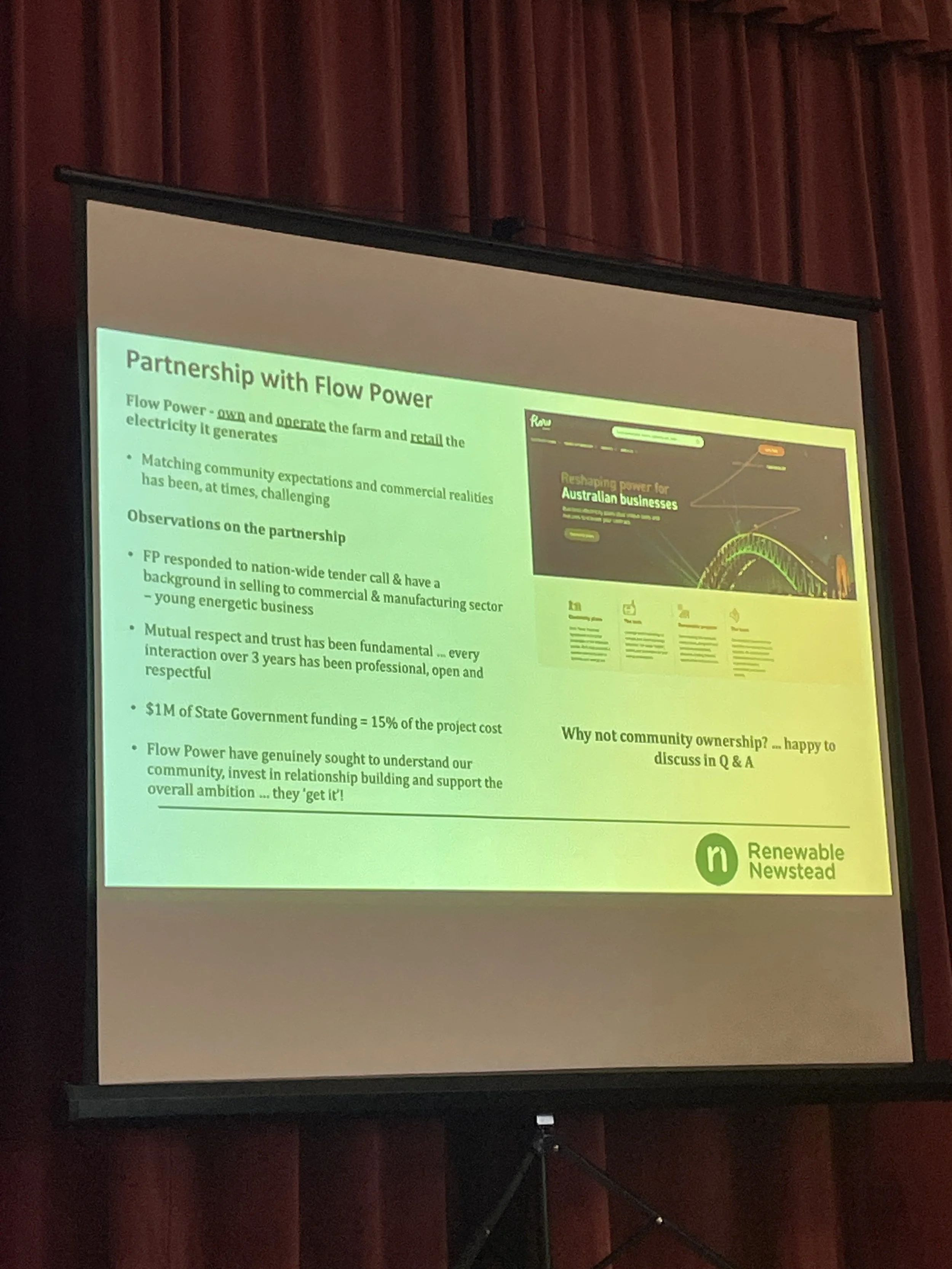
This is not to say any of these relationships have been without respect and mutual understanding, quite the opposite is true and being made for purely political and financial gain, the transparency has been valuable (i.e the local retail offer). But the flipside is that without the support of the Victorian State Government, and Flow Energy, none of this would be possible.
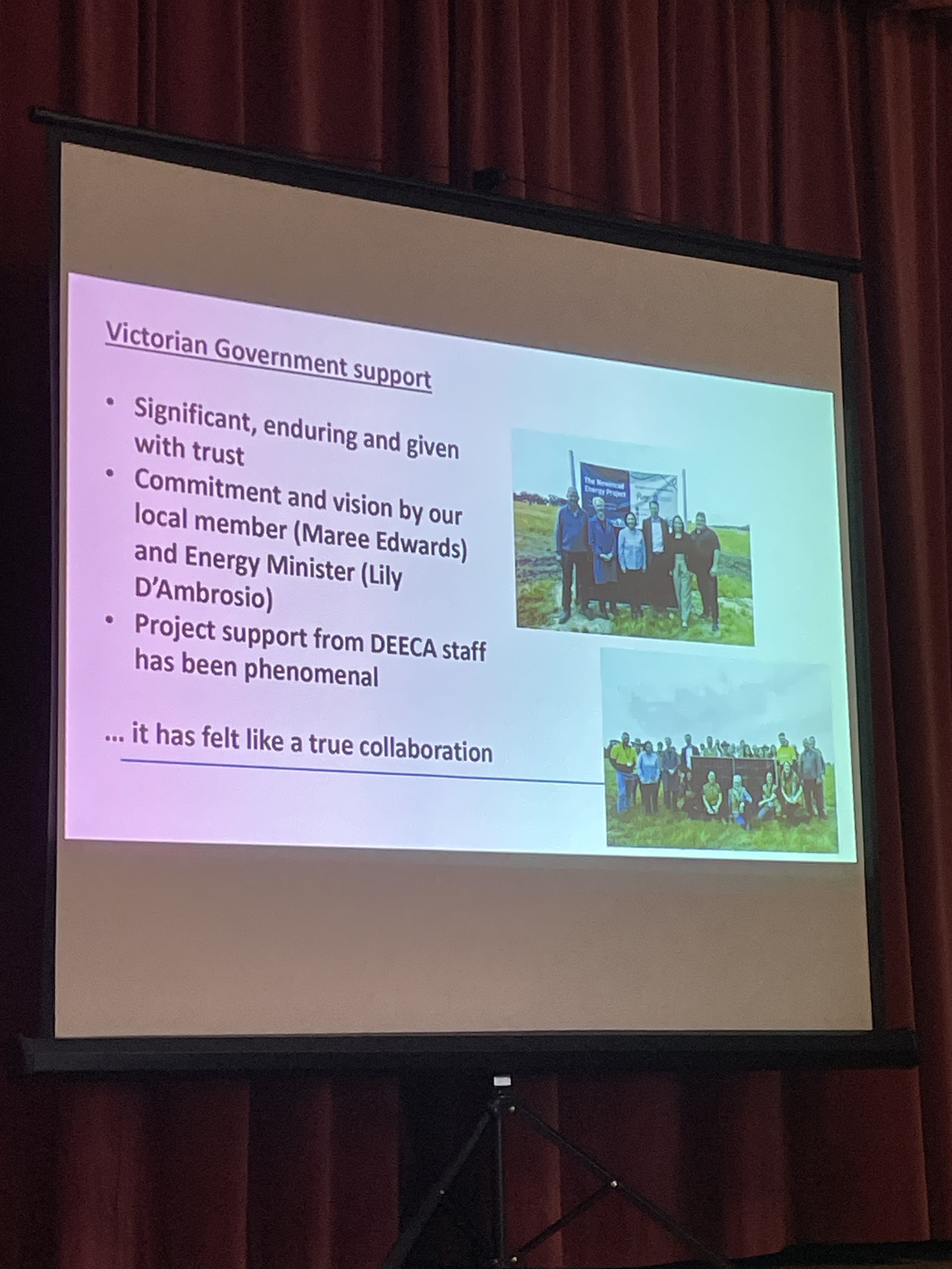
During the Q and A, what Park’s reminded us was that the community engagement is scalable and replicable on similar projects. However, “local license” is critical, and changing values when engaging with local community has the power to KILL projects, not GROW them.
Whilst the solar farm feeds into the grid (powering 1600 homes or similar in the wider grid), Park’s left us with this comment, “Trying to start a project like this, is a bit like trying to join the AFL when you haven’t even heard of football”.
To me as a listener, I’ve got two tales or two different towns. One in Hepburn Energy which is community 100% community owned, and another which is 100% private ownership but both were community driven. You tell me which is the better outcome for the community at large. Nonetheless it was fantastic tale of “buyer beware” if you or your community is looking to do any type of project where you are reliant on outside investment to develop it. What are you prepared to trade to get this off the ground.
*****
Next we had a change in tack. Professor Mark Luther from Environmental Energy Services. He showcased two innovations that his team of researchers and installers have been working on.
Ok first things first, I have a slight conflict as I am actually a former student of Prof. Luther from my days at the Deakin University School of Architecture and Built Environment. Ok that aside…
Luther showcased his ceiling hydronic system in how it has a few similarities on how the human body works, i.e a mixture of radiative, convective (these two make up 75%) and respiratory means to moderate temperature. His thesis is that ceilings is most buildings are the thermal liability as they are the predominant means of heat transfer in buildings. Therefore condition the ceiling plane to create multiple air-changes per hour through a serpentine flow system mounted on the ceiling, not unlike those for heating only laid within concrete slabs, as it fundamentally relies on convection (movement of hot air to cool air and vice-versa) to create this.
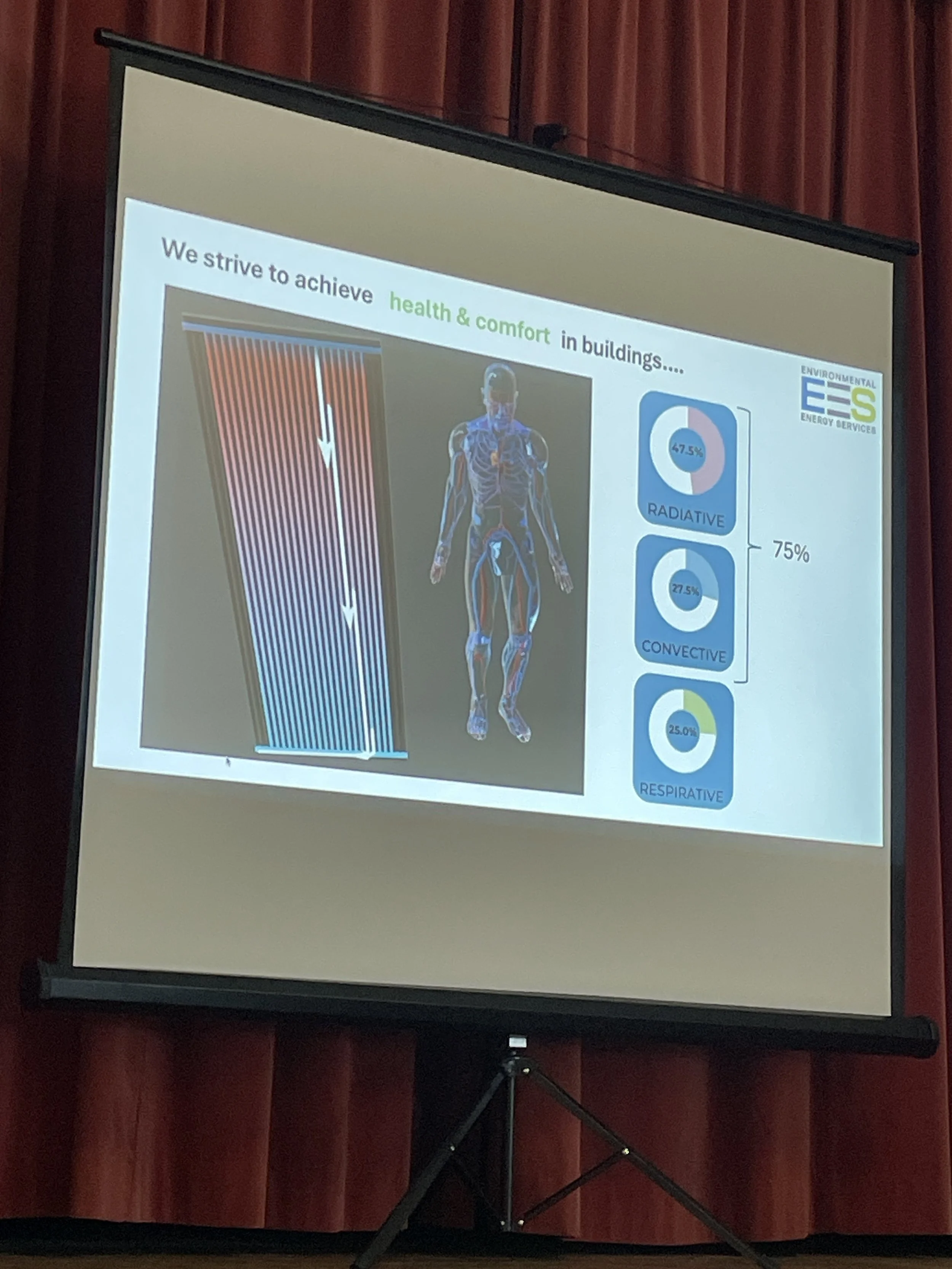
I’m sharing my notes and snaps of the slides, and I confess - my brain spins! and - I rely quite heavily on my services engineer on how to navigate issues of thermal performance, beyond my base understanding of passive solar design. Ie. Insulate the roof like crazy, thermal mass when you can exists internal to the envelope and screen your windows from direct solar gain – any architect out there reading this already knows this. However, a system like this could have the potential to be used in any commercial typology that uses suspended ceiling tiles.
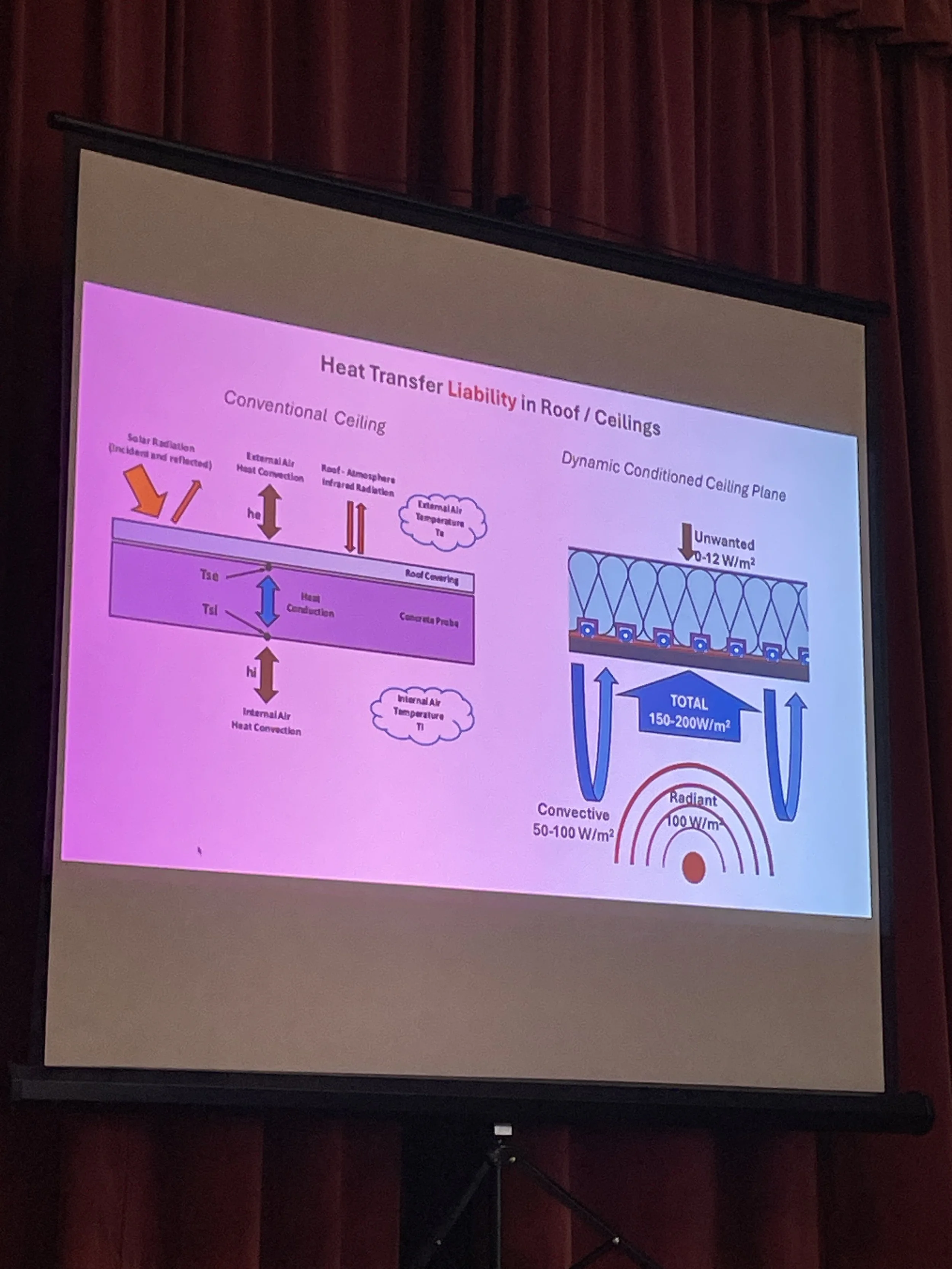
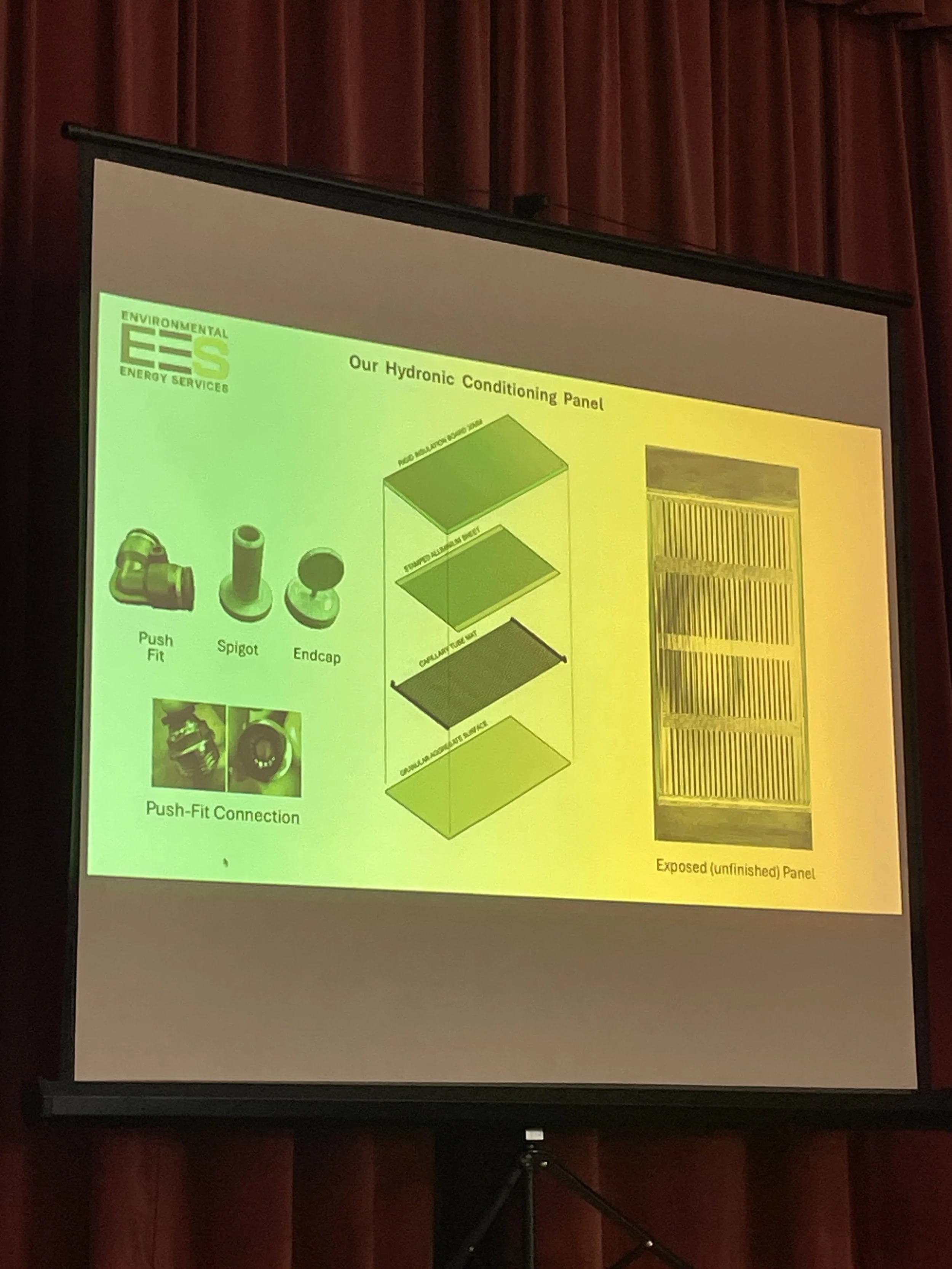
Professor Luther will soon need to be challenged on the economic efficacy of this system, as it appears to favor very thin ceiling materials, less than the usual 10mm plasterboard or acoustic tiles used which will be difficult to dislodge. But if it is acting as triple duty insulation panel; heating/cooling panel and finished surface, who knows what upside a system like this could have.
The late morning session was presented by AusNet on Demystifying the power distribution network. This was a bit of an “energy distribution 101” crash course, and for me it highlighted a lot of issues in our power generation and distribution network.
The key point (and graph!) was the “duck curve” that AusNet (and Powercor) have to moderate each day – and that is the sheer amount of roof-top solar that is fed back into the electricity grid most days – that the grid was never designed to handle in the first place. The grid always has to be in balance, because either you get High Voltage is too much power is circulating or Low Voltage if there is a deficit. Readers you might not be aware, but often the summer / sunny months Victoria comes close to being carbon-neutral and not really needing to rely on the coal-power energy electricity generation. There is already close to 36% “green energy” circulating in the grid nationwide.
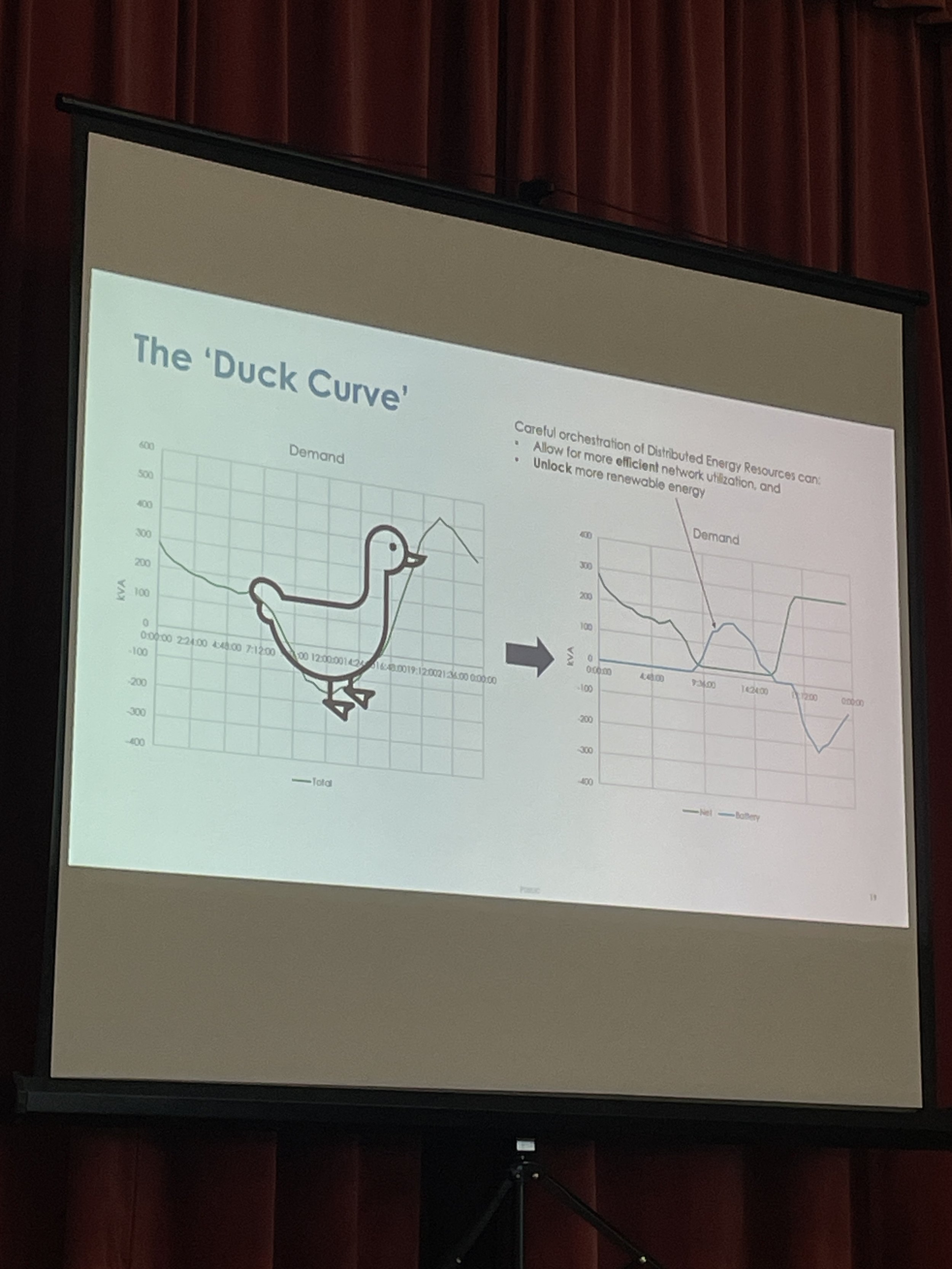
This has been a hot topic in the Australian political landscape, particularly on the goals of achieving Net Zero by 2050, because the solutions (according to this piece by AusNet) are either:
- Wholescale upgrade of the energy grid, or
- Decentralized energy production and storage approach to alleviate High Voltage, through mini-batteries; grouping households with solar panels as Virtual Power Plants or using EVs as is they were batteries for household use
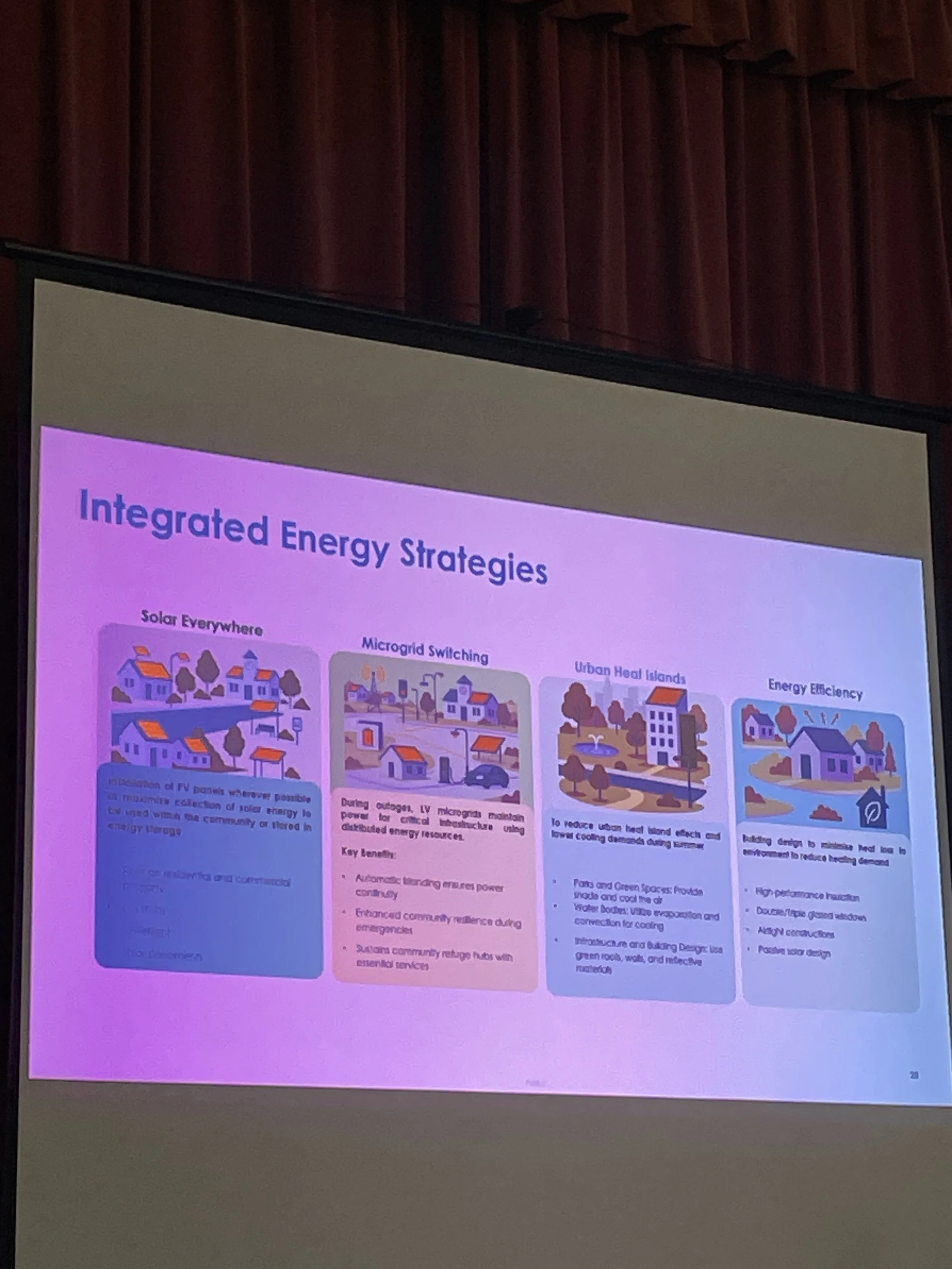
I must admit as a view, I learned a lot but again was demoralized in being reminded that upgrading the grid is political sensitive in regional areas; it’s incredibly expensive for governments to embark on this and; not every household can own a solar array, battery or EV as they are prohibitively expensive.
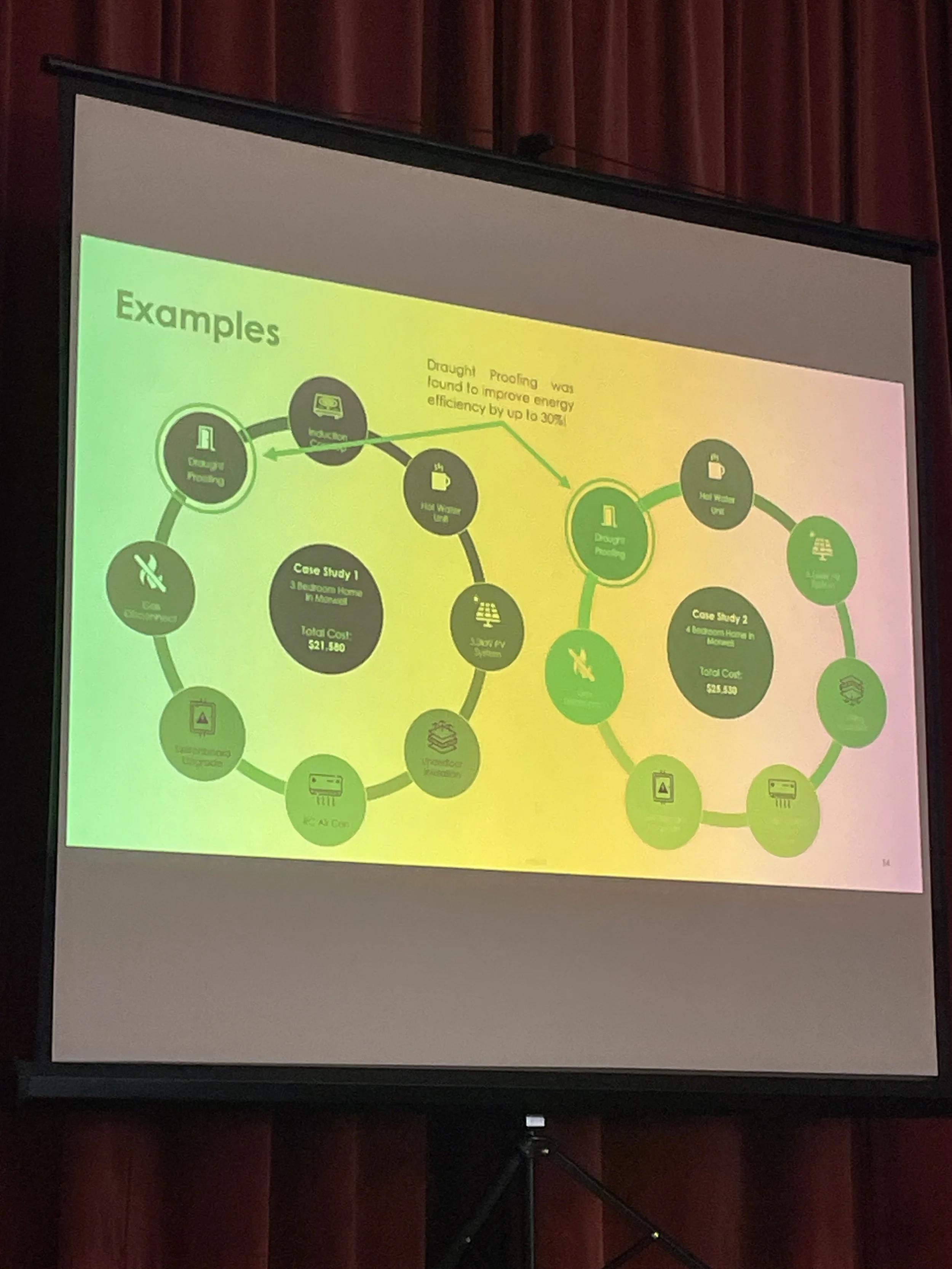
Having said that, according to AusNet, the best value action you could take to reduced energy use for heating and cooling was reduce draught in your home, attributing to some 30% energy savings - if you couldn’t do anything else.
There were some excellent questions from the audience including, I paraphrase, “How does AusNet maintain their supply chain is also aiming towards NetZero but also considers ethical procurement of the materials and industrial products required to upgrade and maintain the network?” The Devil’s Advocate in me wants to point out that materials are imported and manufactured worldwide. I think AusNet could have another go at answering this question beyond saying that they were “agnostic” on what their supply chain does, as their focus is delivery of uninterrupted power to their customers.
Quick thoughts
A lot of solar panels and electricity generation for an architecture conference! The takeaway thus far is the community-led projects take a long time and a lot of sweat equity. Saul Eslake might be onto something with community owned energy projects, but the reality on the ground (at least from the two presenters!) is that money talks, and if the group doesn’t have it, it has to be imaginative and entrepreneurial on how the community engagement and financing model supports the project.
Let’s have a short break!
I’ll break it there for Day 2 as this journal is quote long. As always, if you were there, let me know what you thought. Otherwise stay tuned for Day 2 Afternoon Session. Thanks for reading!
Redmond Hamlett is a Director (Projects) at WHDA Design & Architecture.