Regional Architecture Association - Power in Community 2026 Experience - DAY 2 Afternoon Session notes
Dear Readers,
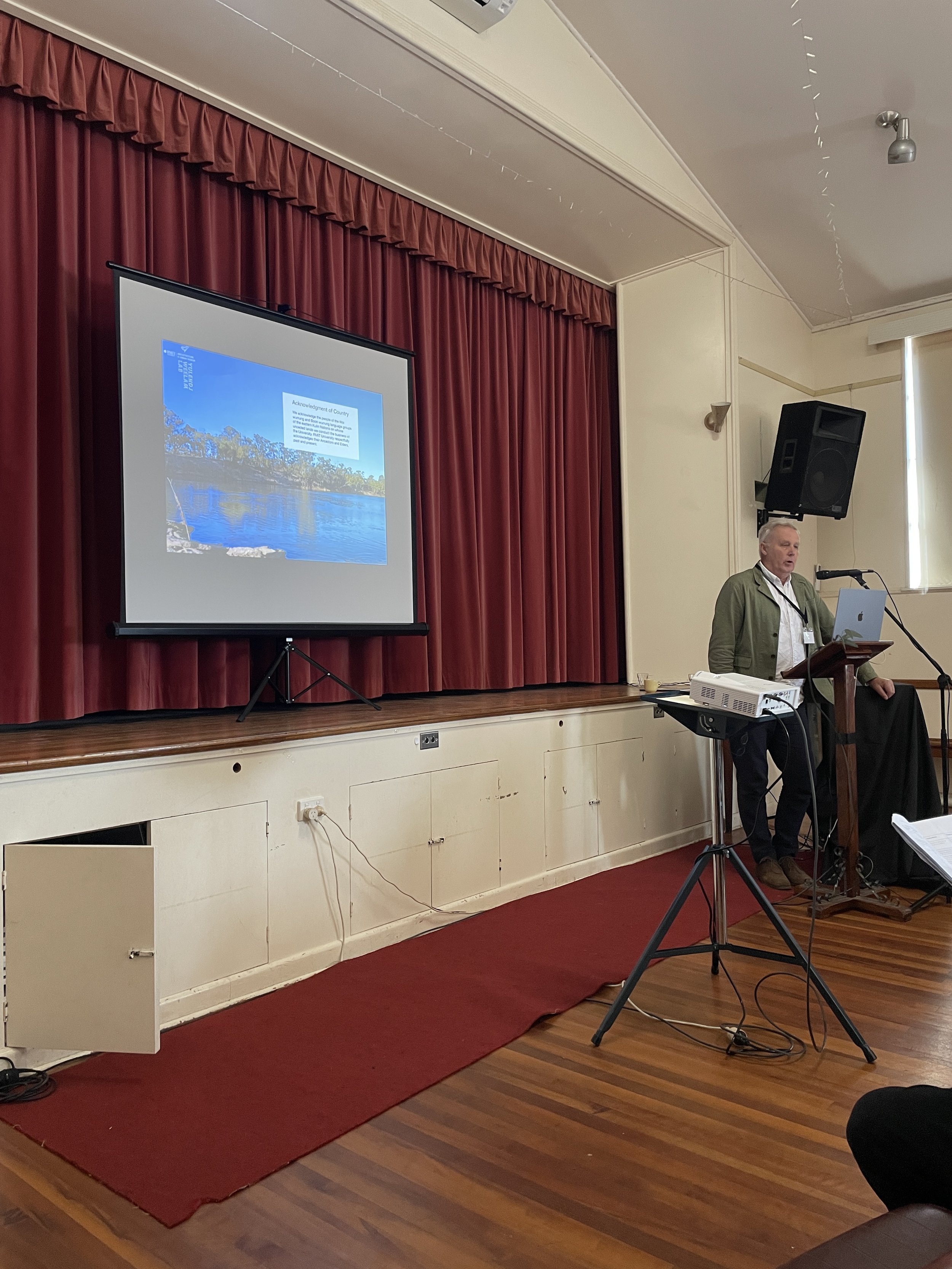
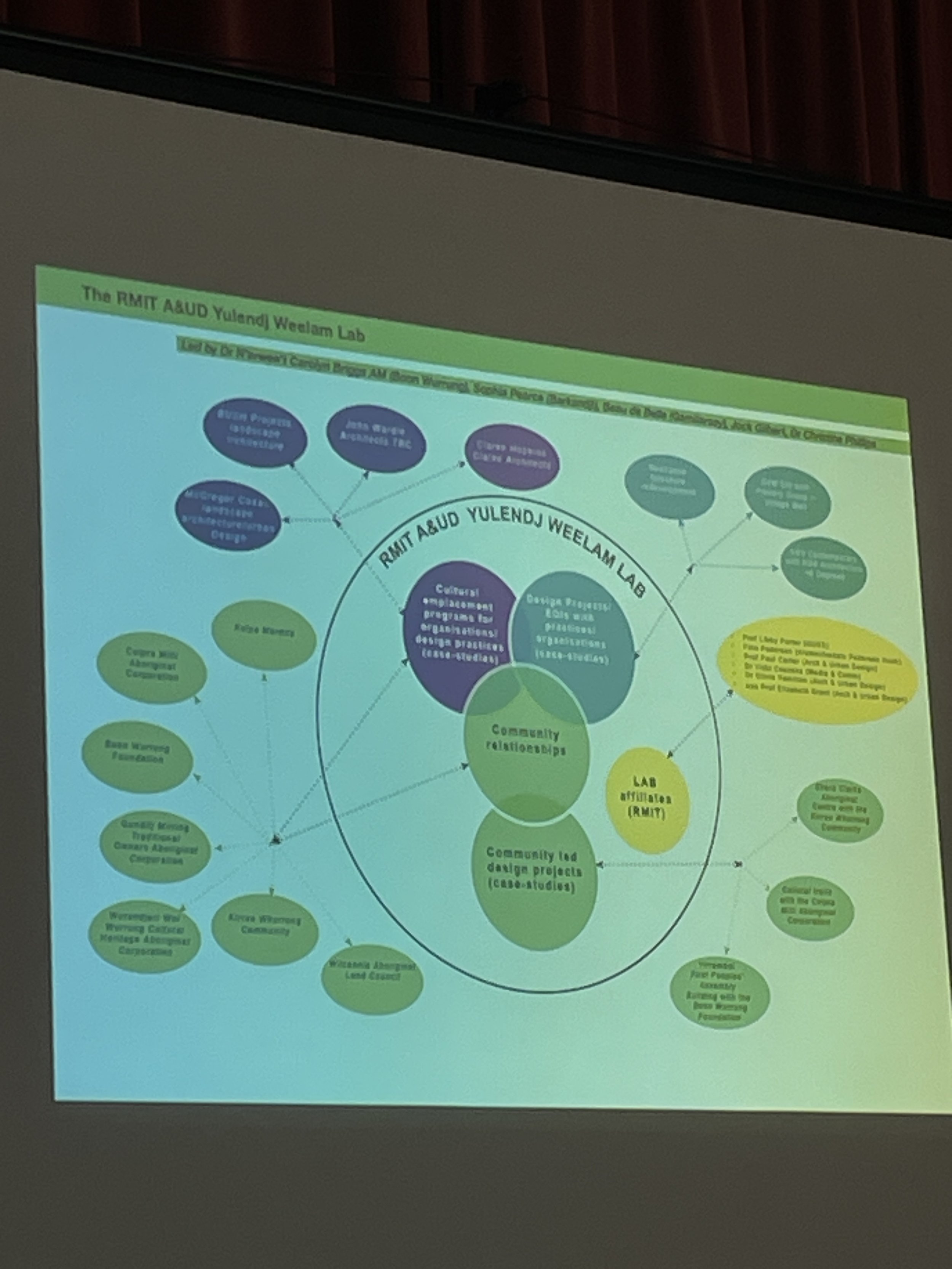
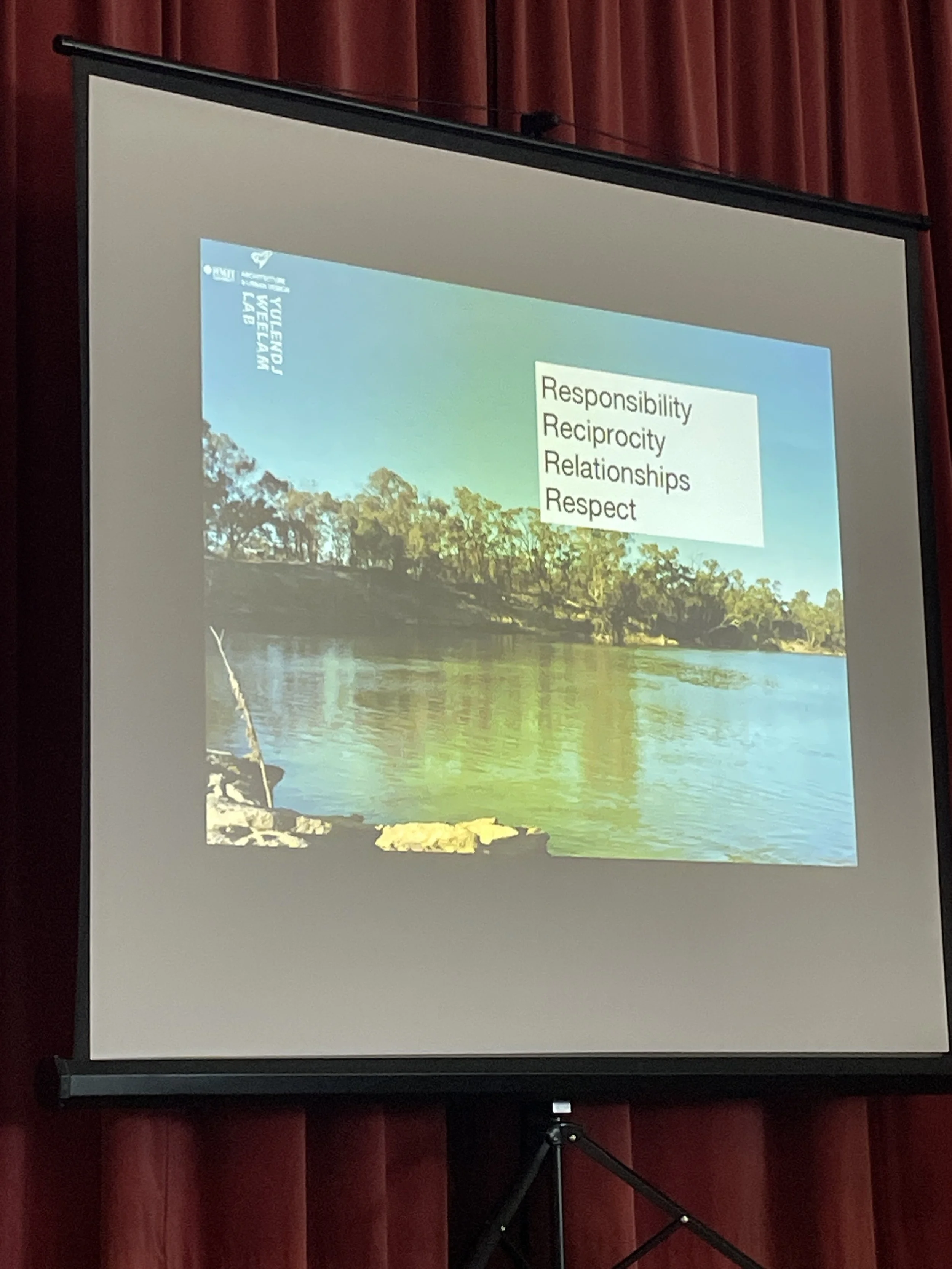
After a wonderful lunch put on by the Guildford Public Community Hall co-op, Dr Jock Gilbert from the Yulendji Weelam Lab at RMIT Architecture and Urban Design on How design practitioners can ensure Australia’s built environment responsibly engages with, reflects and supports First Peoples and their knowledge. Ok spoiler alert I really enjoyed this presentation, now I feel like I am at an architecture conference! Gilbert gave us a summary of where his research and teaching lab is at in creating both design studio opportunities but gathering a body of research to develop frameworks on implementing respectful ways to engage with Country as a way of approaching reconciliation with our indigenous community.
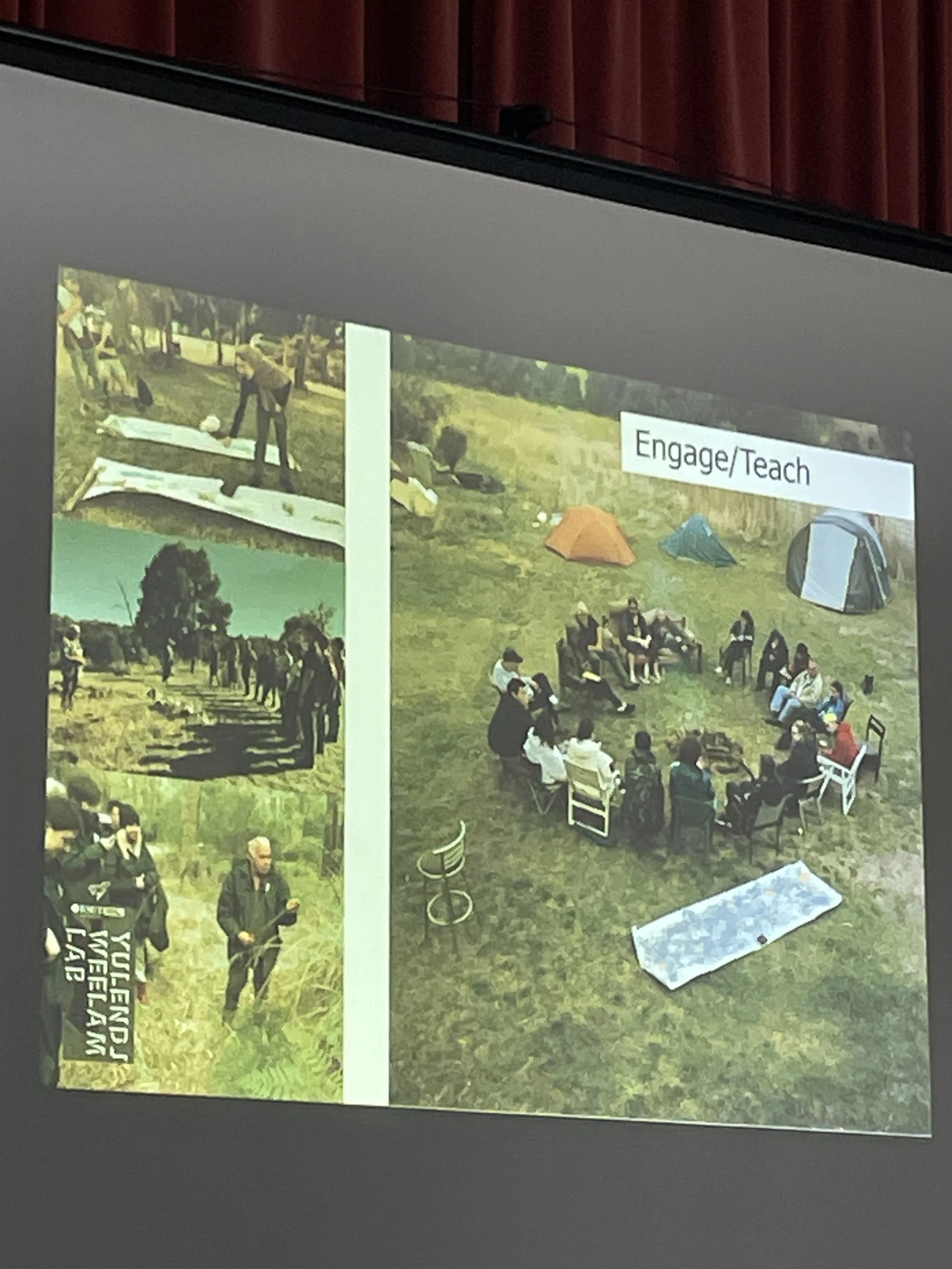
We got a fantastic overview of the work that Dr Gilbert and his team have developed on a few examples of work with the Wadawurrung Country community members and elders on conducting design school studios. Time and deadlines collide quite violently when working on Country, Dr Gilbert and his team suggest suspend your expectation, therefore go back to these three principles when engaging in Country for design including:
- Have an ability to respond to the life story of others
- Practice reciprocity
- Build trust, as with without nothing can happen
I appreciated Gilbert reminding the audience that as professionals who come from a way of research and developing evidence-based design that you need to “moderate your own expectations”. It’s not repudiate the past, or to suggest that what you have been doing up until now as wrong, but it’s to critique current practices and accept that they are not inviolable. With that, a further reminder that we are always on Country – city, regional areas or the bush, it doesn’t really matter. But what does matter is that you apply deep listening – locate yourself in some else’s story, and place. There is also a lot of optimism in this approach, as there has been a big push for indigenous knowledge and understanding (and not just from the public, or levels of government, in the commercial world too), therefore the opportunities and learnings for everyone embarking on this journey are huge.
The flipside is that the optimism also carries an obligation – and I feel one that needs to be worked on (given the failure of the Voice to Parliament referendum in 2023). Gilbert quoted Prime Minister Paul Keating from his apocryphal 1982 Redfern Address that “we need to see Australia through non-indigenous eyes.” Further Gilbert quoted Bill Gamage (The Biggest Estate on Earth: How Aborigines made Australia, 2012), “We have a continent to learn. If we are to survive, let alone feel at home, we must being to understand our country. If we might success, one day we might become Australian.”.
Some excellent questions came from the audience, including, “when engaging with Country, how do you know if you are doing a good job?”, to which Gilbert replied, “well you might get some cranky community members – but that means they are engaged. This is much better than saying nothing (which means they’ve given up).” There were a few laughs in the audience, but Gilbert reminded us all that doing something - at least trying to engage - is better than doing nothing. Even if the outcome doesn’t work out how you might have initially intended.
There was one excellent statement of frustration from an audience member, I wish I grabbed his name (and asked where he was visiting from), there was a statement of frustration from a practitioner who is also an indigenous person, who wanted to insert himself into the role of being the engage-ee on projects if no-one or group from Country has been identified. Gilbert suggested that you gain a reputation as being the “bloke that does everything”, but it can’t always be one person who champions change. It’s our job as non-indigenous people to lighten the load.
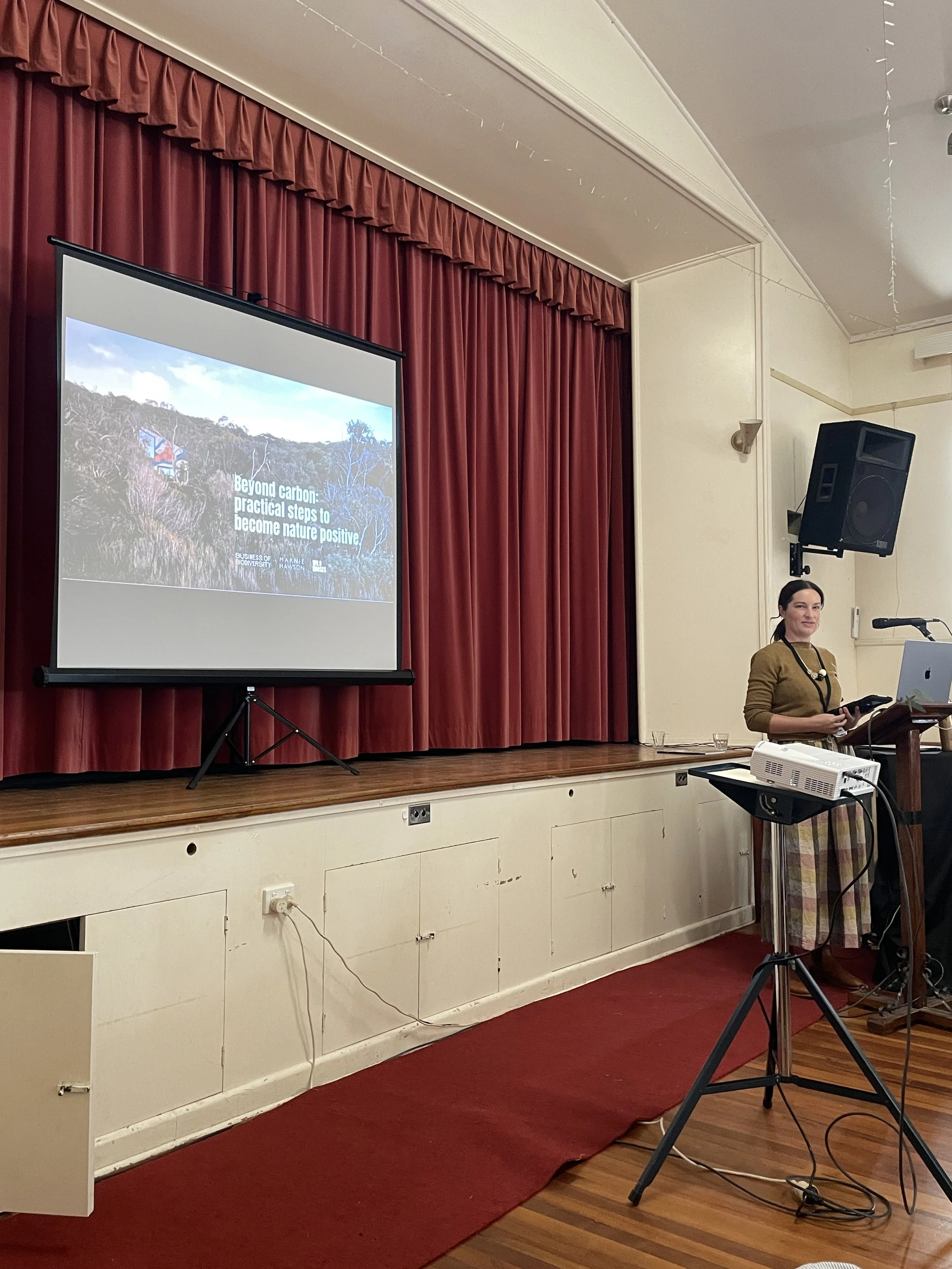
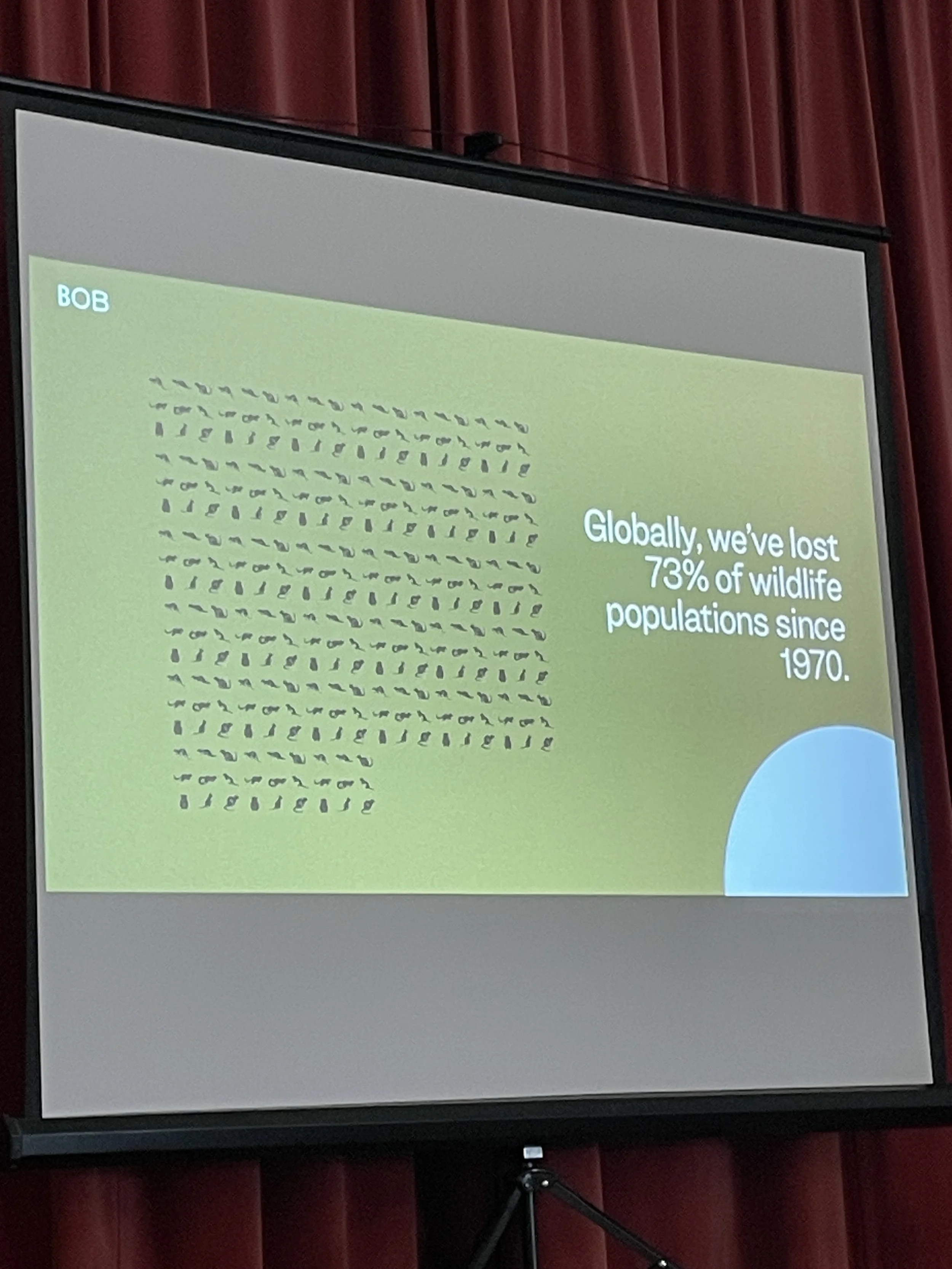
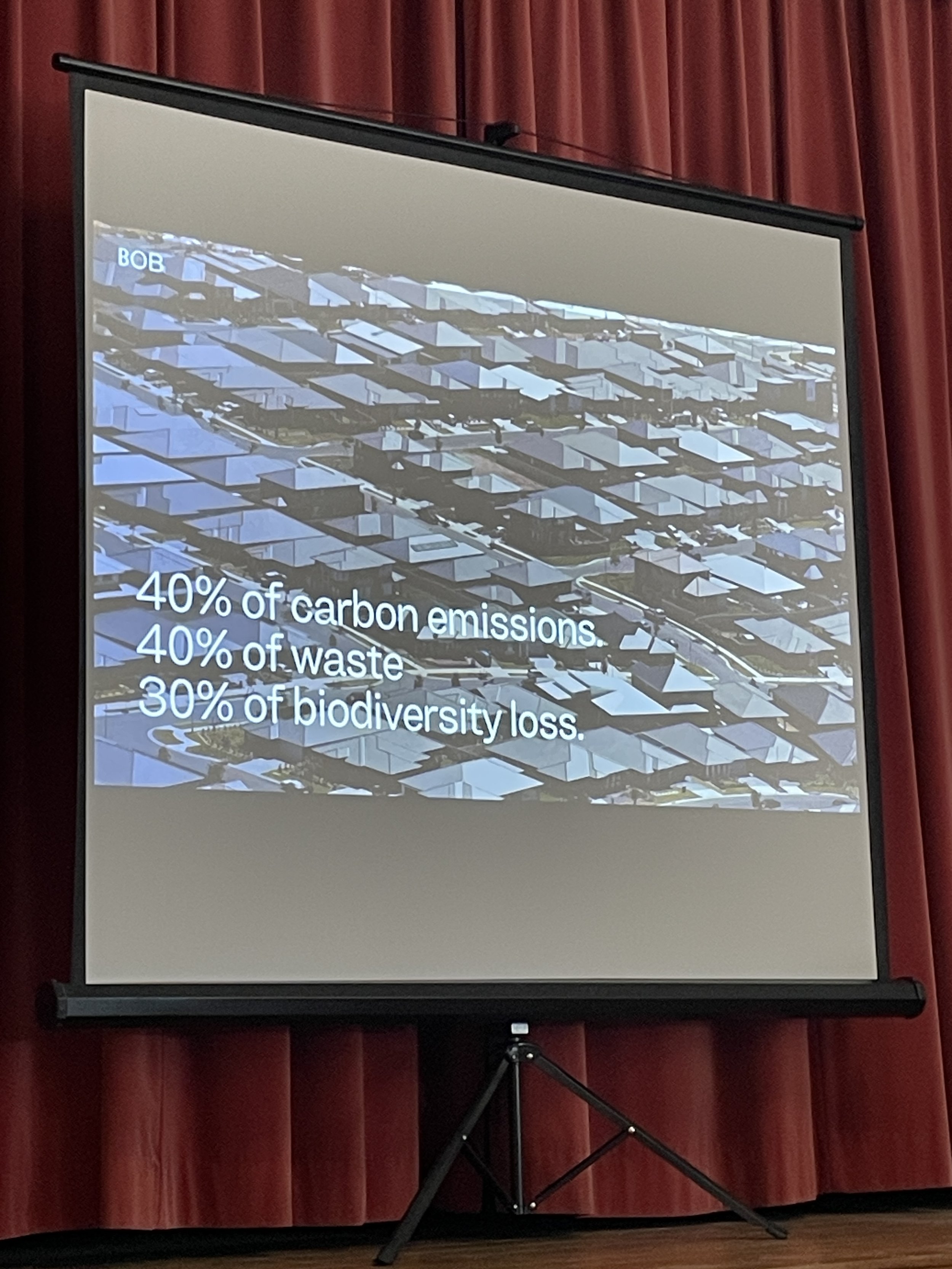
Next up was Marnie Hawson from Marnie Hawson Pty Ltd including the Business of Biodiversity presenting “Beyond Carbon: Practical Steps to become nature positive”. Hawson had a very interesting proposition to us architectural practitioners in the room, was that to think of nature as the biggest community we have on the planet as most business and industry rely on nature to operate, yet on most development projects they create carbon emissions, waste and add to biodiversity loss. According to Marnie, the industry has moved towards thermal performance as being the yardstick for high-quality architectural output, but largely left habitats or biodiversity aside.
I tend to agree with her – the cynic in me further suggests that our industry has a fixation on greenwashing and fetishization of recycled materials and Passivehaus as the benchmark of what environmetally-conscious actions you can take, rather than say social outcomes, reducing embodied energy use, adaptive re-use (i.e doing minimal interventions and saving materials from landfill) and nature-positive design responses.
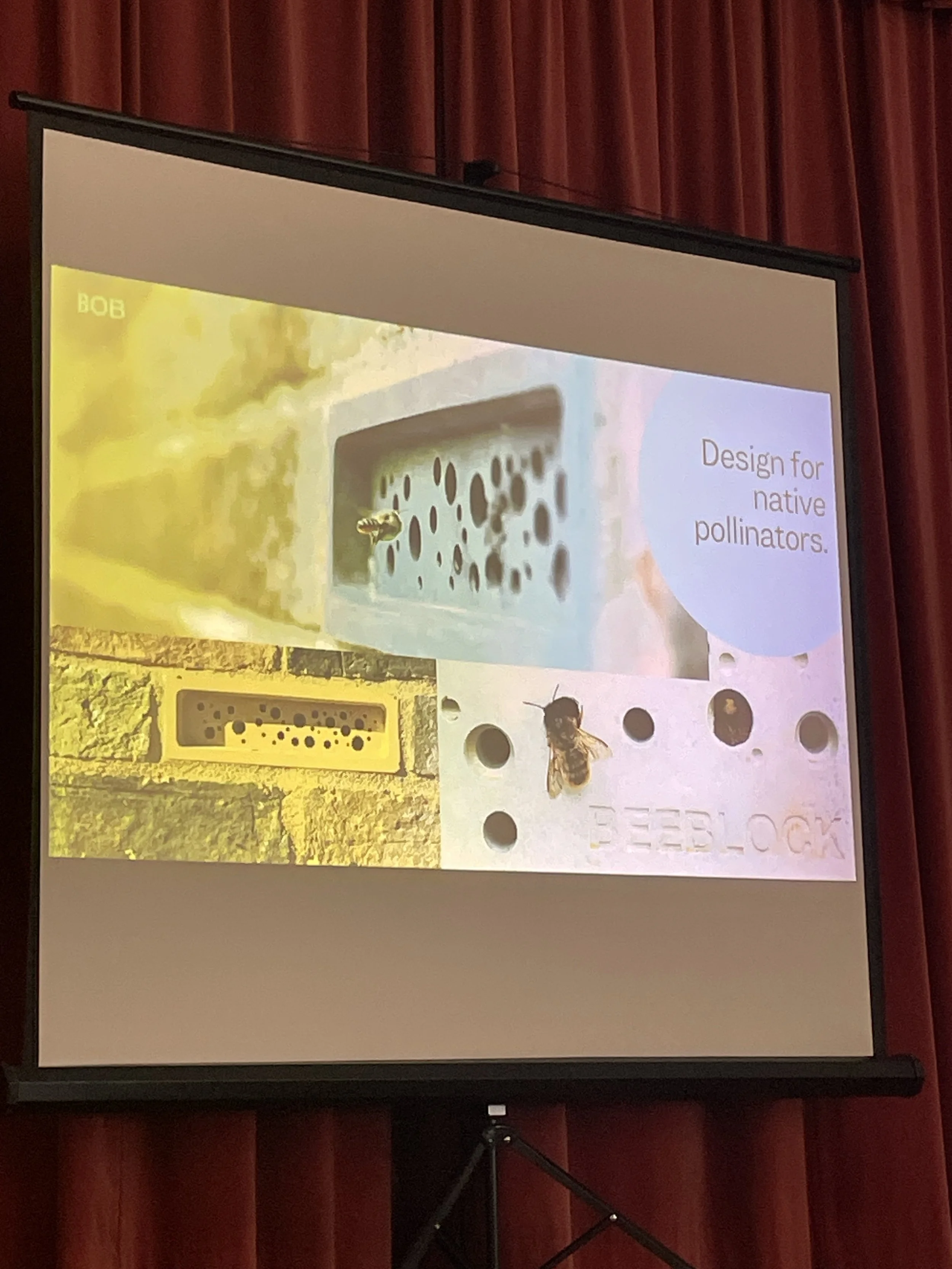
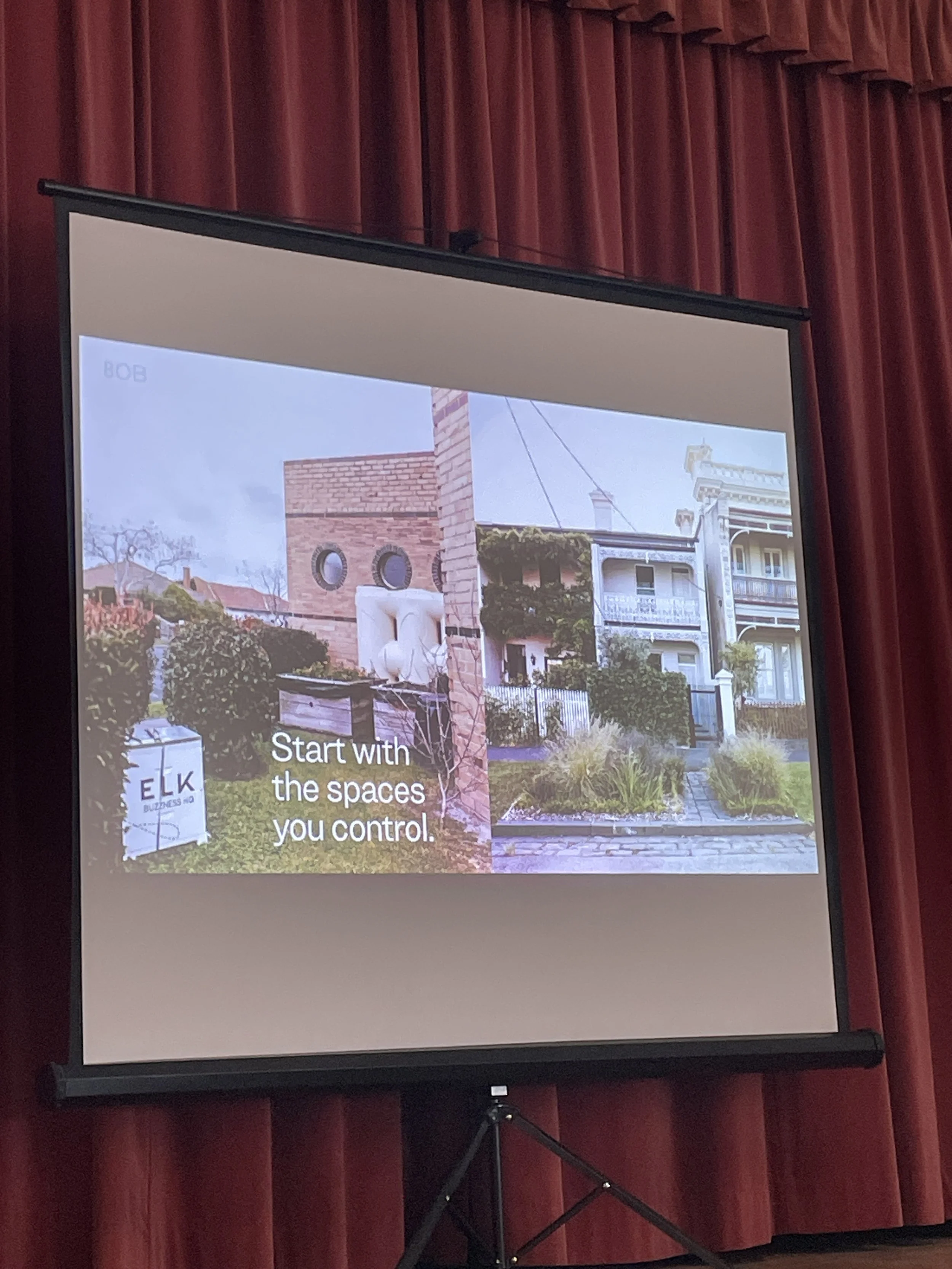
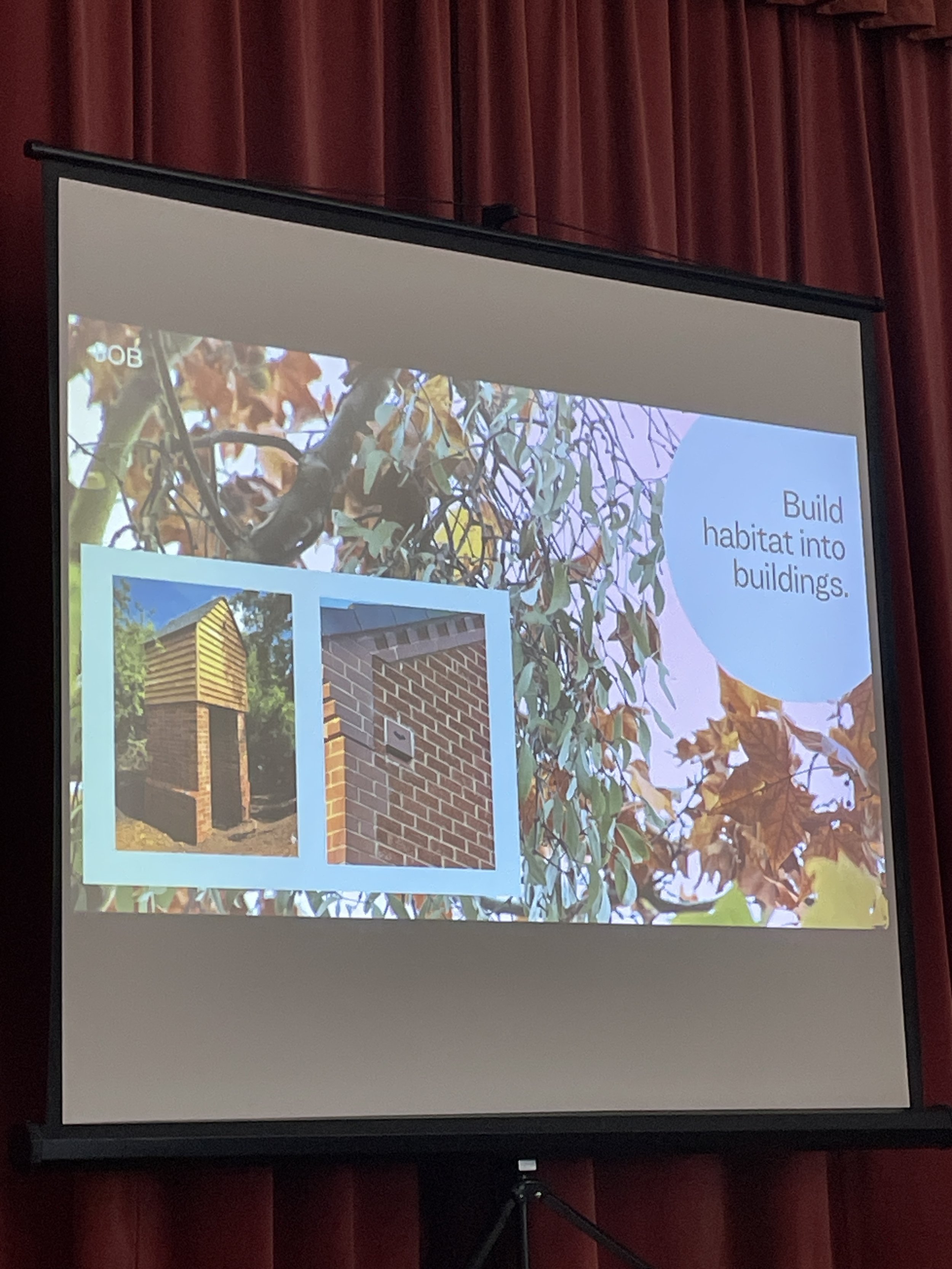
Hawson gave us all a “call to action” and consider “baking nature in” our design projects. But not only that, what small actions could you do as an individual or as a practice. These could be little things like scheduling bird-bricks or bee-bricks into claddings; insisting on ethically sourced material that proves its procurement and provenance; it could mean limiting cat-areas on residential projects, or even creating the circumstances for mini-habitats of insects, bees, birds and frogs in creating small gardens, ponds and treed areas in our projects.
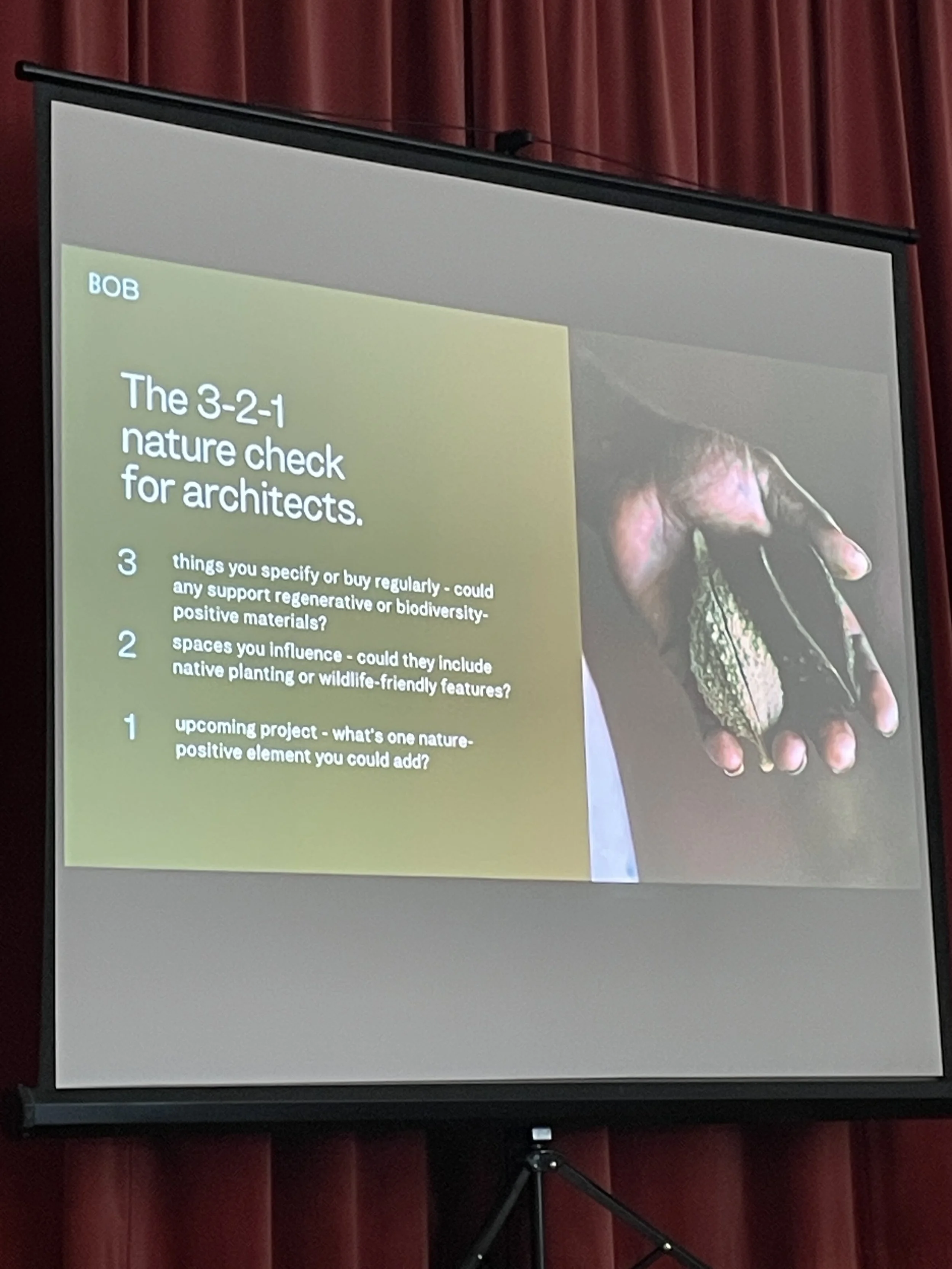
There were a few good questions including, “how do you introduce things that client’s don’t ask for in their briefing or that legislation doesn’t require?”, and in a “advice by stealth” way Hawson suggested “Show them what the benefits are! Everyone has a link to nature, just see what sticks!”.
After a quick afternoon tea, next up was Jill Garner, Government Architect from the Office of the State Government Architect Victoria (OVGA) with her presentation, “The State of Things”. We got a great overview of the policy work, and design guideline series that the OVGA offers in trying very hard to advise the state government on the benefits of good design; how to get there; and how the OVGA and the State Government can intervene on speeding up the types of projects that suit the current government infrastructure and housing policy.
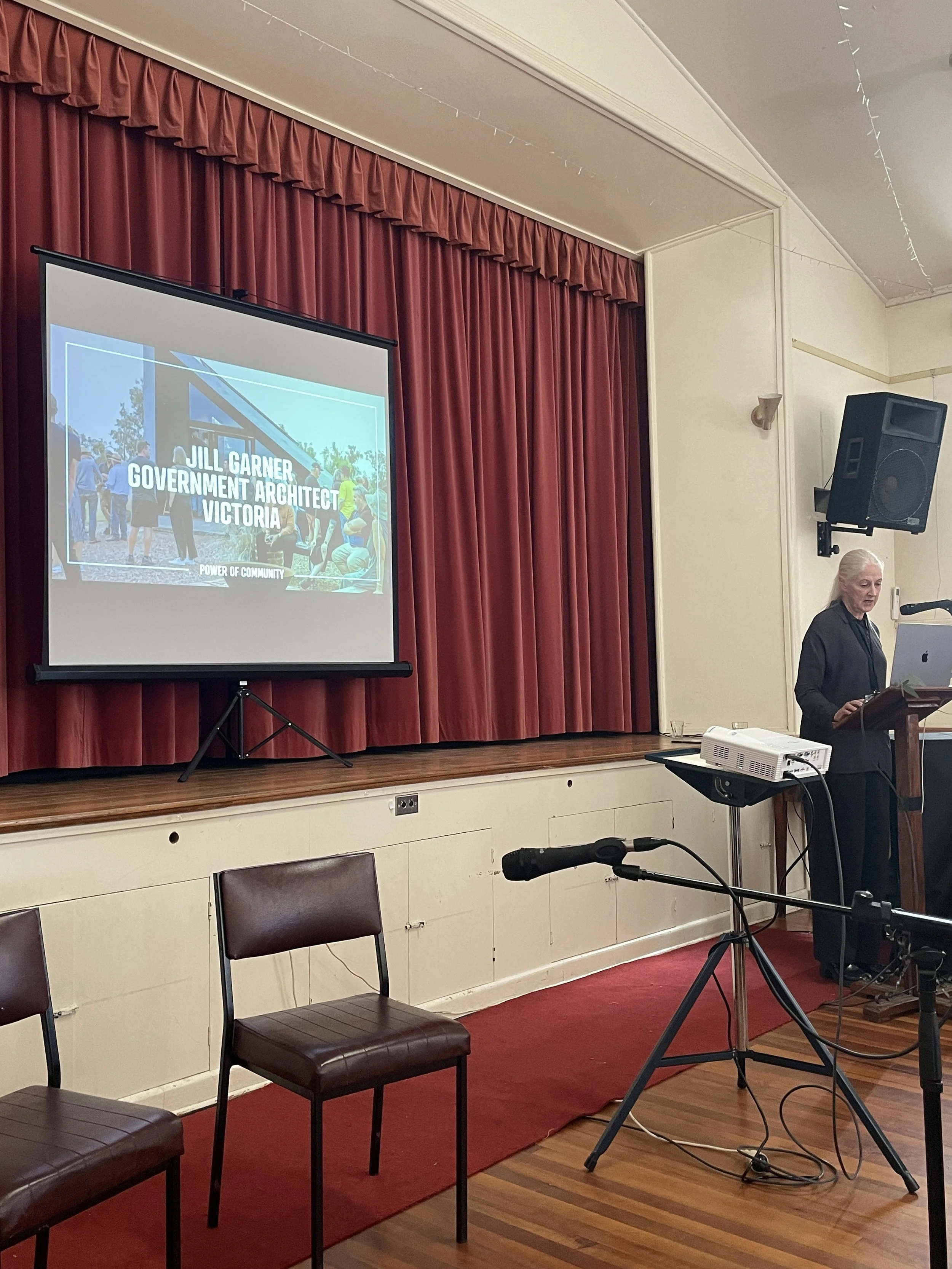
The gist of Garner’s presentation was that through the “soft tactics”, her office is day-by-day challenging the mindset that “good design costs more”, and that design work generally has often been blamed for high-cost projects (rather than say, economic conditions that inflate building costs and create project budget volatility). Her office does this by evidence on the outcomes of good design, and reviewing what these principles look like on their advice to government guidelines.
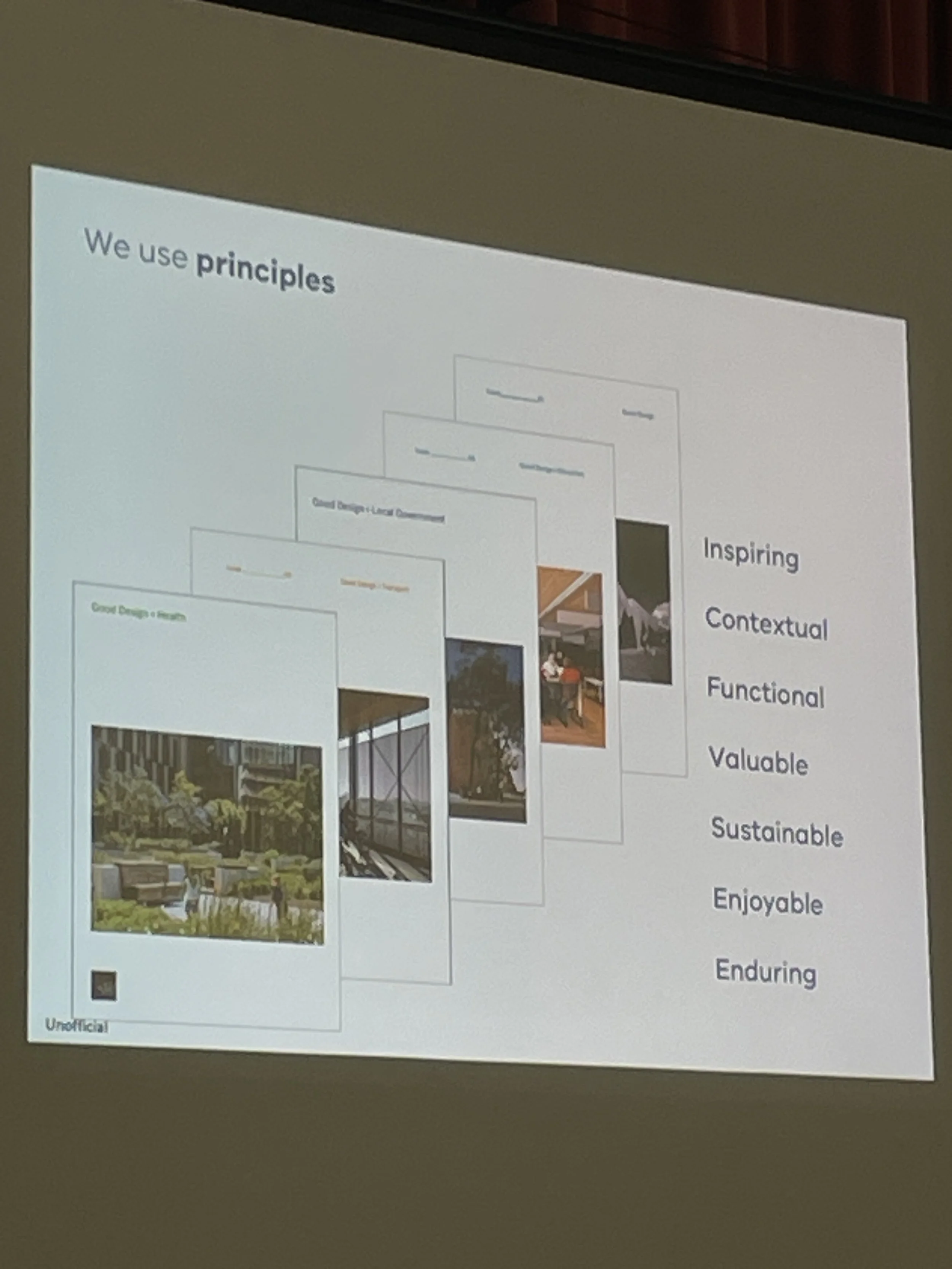
One very pointed question came to Garner, “All of us in the room agree that good design is ‘good value’, and bad design is bad for the economy. If that is accepted, then why do LGAs continue with out-of-control free market tendering processes, that often rewards very low fees? How does low fees translate to the good outcomes if the OVGA is looking to instill in government that good design is worth paying for?” Garner suggested that this is a problem for industry to resolve (as the Fee Scales have been long removed as considered anti-competitive). But as a result, firms of all sizes are looking for projects in high and low places like never before.
Nonetheless, on the valuable work on assisting government by design-reviewing strategic projects, there was a sleeping giant in the room – the “Great Design Fast Track” programme that potentially streamlines medium density project planning applications - and that of the State Government’s 10 year housing policy to build close to 800,000 homes. The OVGA get a handful of these sorts of development applications (through the Department of Transport and Planning), but aim to get them approved within a 4 month timeframe. This programme as massive upside potential.
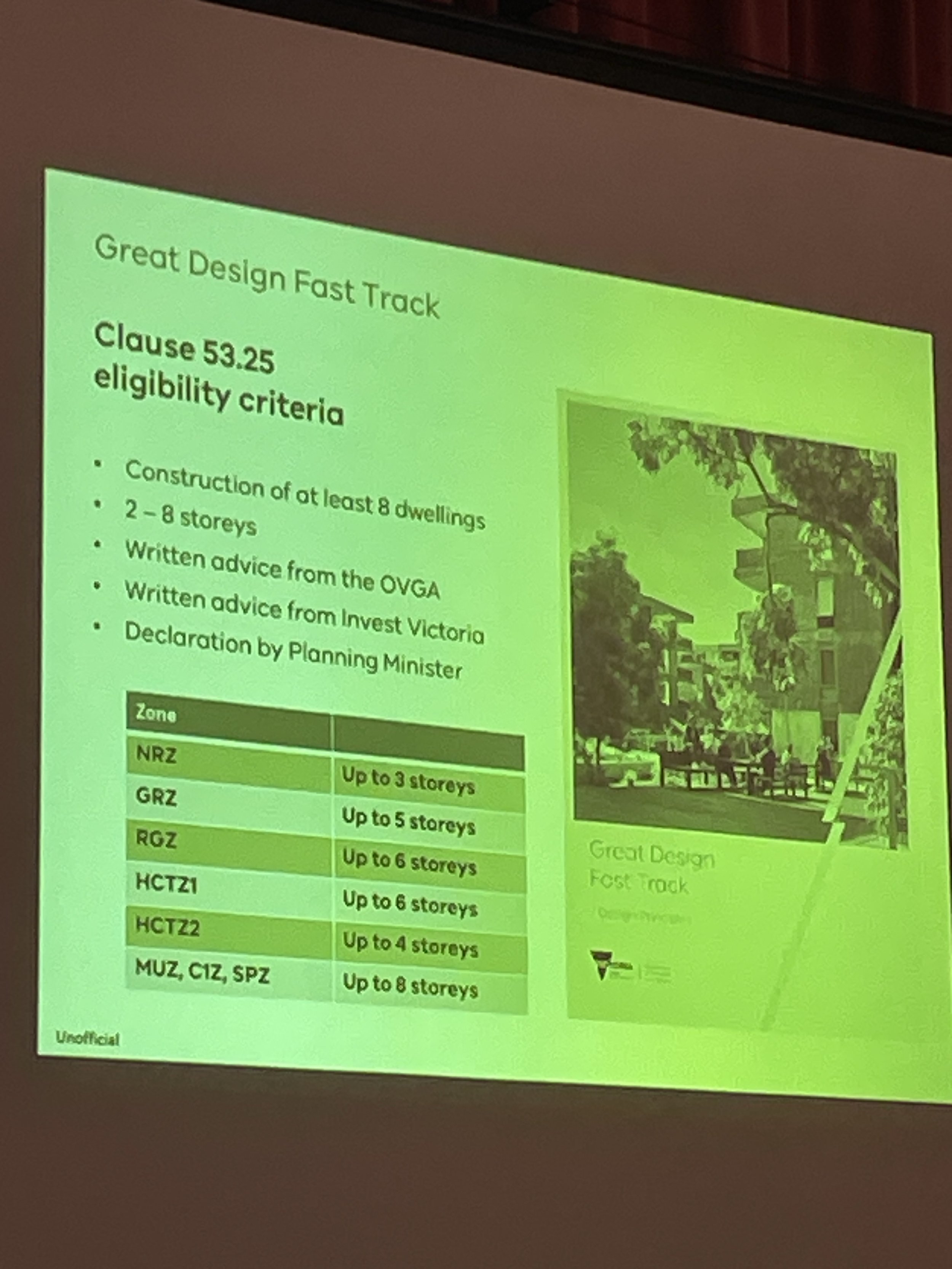
The profession is all for this, and the mix of housing, denisity and construction methodologies offers would-be developers quite of a lot of choice on which pathway they embark. But for me as the viewer, I am faced with a paradox of developers that have an ability to fast-track their planning application (hence, develop soon, provide more homes sooner, ergo, return on investment / profit sooner), and a figure of homes that industry is probably not equipped to deliver – unless a broader net of consultants and contractors are included in the industry pool. During discussion, Garner had to concede that the development industry is taken on at face value. This is topical given the recent media implosion of the Assemble Projects who had to reconsider their “rent-to-own” market offering due to rising construction costs. I am reminded further by the Australian Community Housing Conference 2025 (with thanks to @Elvin Chatergon who wrote this down) that to build a 2 bedroom 80m2 “affordable”” unit / apartment in Victoria, is around $650,000 gross construction cost (and this scales up the further you travel north along the eastern-seaboard).
What is not being spoken about here is that to achieve the above goal would be transformative for the state, but requires more openness in procurement, consortium creation and but also challenge “what makes up a new home?” – is it stand along homes in green field corridor sites, hi-rise towers along City Road or do we need to look at alternatives such as refitting existing brick-walkup flats in our inner and outer suburbs to improve their built quality, amenity and maintenance costs, (see the excellent Wilam Ngarrang Retrofit by Kennedy Nolan) not to mention save their structure from landfill and wasting embodied energy.
The last session for the day was a panel discussion, with Jill Garner, Dr Jock Gilbert and Geof Park on How to Engage with Community. The topic got waylaid a little bit, which is normal, and really good “war stories” came out. Particularly from Park on challenging the assumptions of what community expectations often are (the tip – try to define what they are first!) and Garner’s experience as being the defacto spokesperson for the State Government’s Skyrail Project as her office went in to defend the project against the initial community backlash by writing a short piece in The Age to explain the community benefits. And what is the moral of this story? Each project needs a guardian angel to keep it going!.
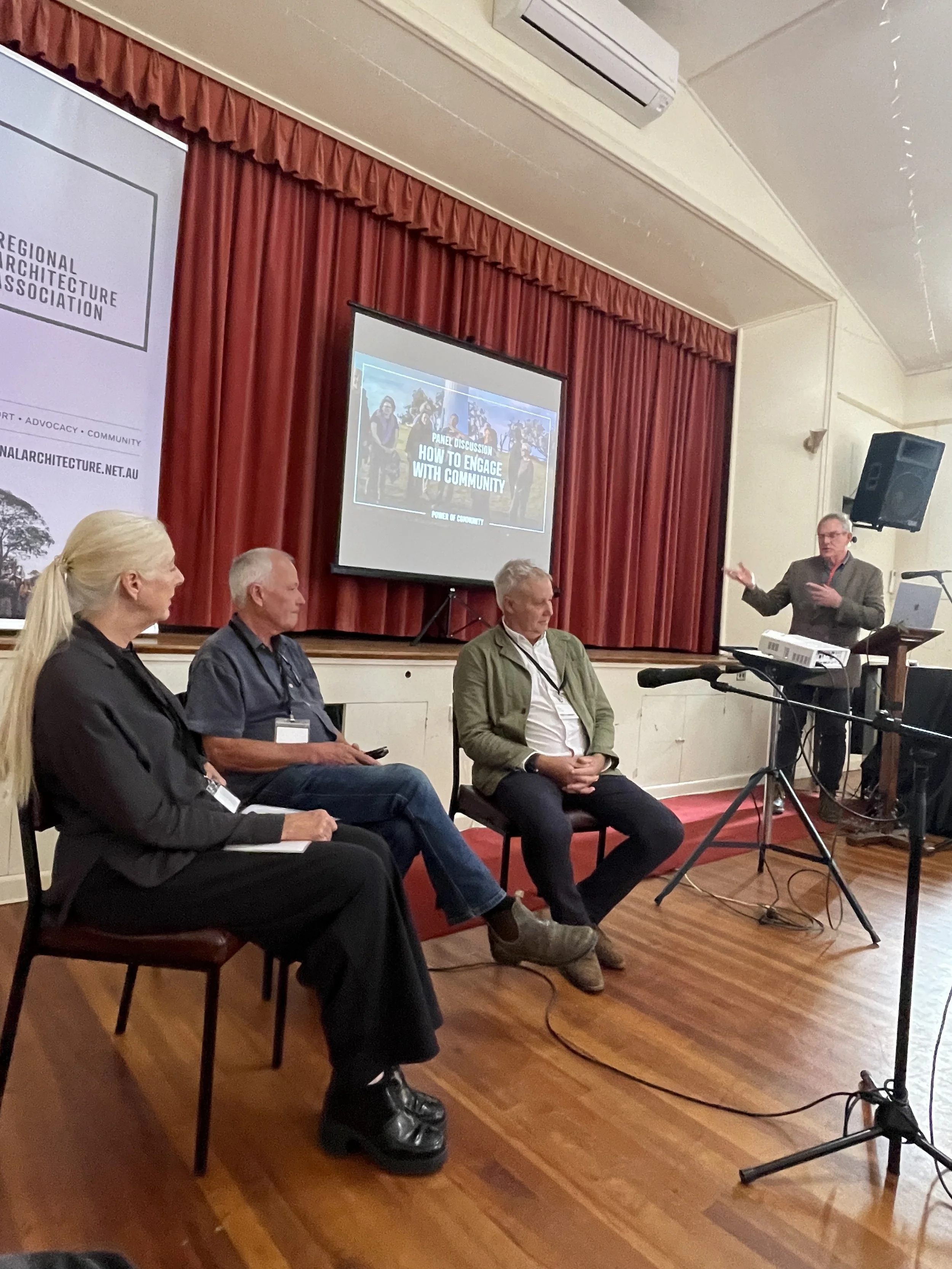
From left to right: Jill Garner, Geoff Park, Dr. Jock Gilber and Tim Lee.
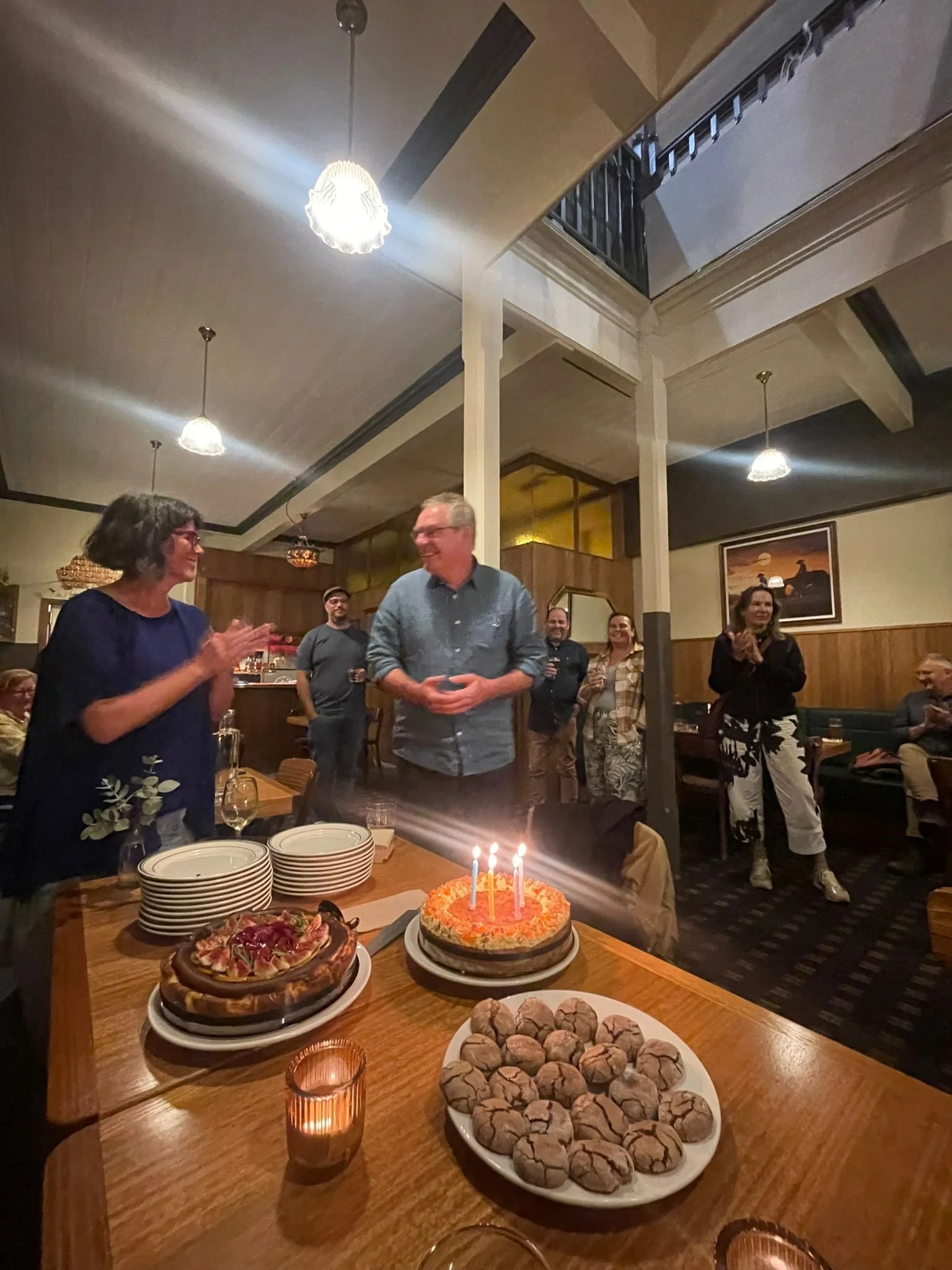
As the sun was setting, the conference attendees moved to the Love Shack Brewing House in Castlemaine, not only to take a load off – but to celebrate the RAA’s 5th year anniversary. True story, Tim Lee got us all to sing Happy Birthday…! I can assure you dear reader I kept myself quite neat and nice, and had some great catch-ups including with my former Building Services Lecturer Prof. Mark Luther (and others).
Some quick takeaway’s:
Government’s get behind things if they believe in it. From Garner’s slide showing the amount of homes Victoria wants to build in 10 years from their updated Housing Statement, and my own perception of this possibility albeit based on my own uninformed knowledge, I’m reminded by Richard Denniss from the Australia Institute. He is often quoted in saying “Australia is a rich country that can afford anything that is a priority”. If this type of thinking can lead to more PPP or JV consortiums that do want to do something about affordable housing, and if they are supported by government, who knows what could be possible. Can it also bring more opportunities to industry if a more-level playing field is established in engaging and procuring the consultants required to build homes over the next 10 years? Prove me wrong if you think there is enough skills in our industry to deliver 800,000 new homes in 10 years.
Trust and transparency is everything. From both Park and Gilbert, in working with communities, trust and transparency is the currency you as a professional are trading on when you insert yourself into their lives in developing their project.
Biofillia is concerned with human experience and biodiversity with that of nature. From Hawson, this one really slapped me in the face, because it suggests that nature positive actions benefit everything.
If you were there, let me know what you thought. Otherwise stay tuned Day 3 Site Tours.
Thanks for reading.
Redmond Hamlett is a Director (Projects) at WHDA Design & Architecture.